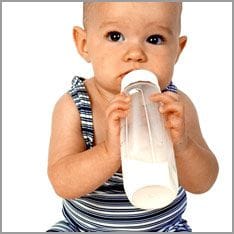
Once you have started complementary feeding and made the first decisions about which fruit or vegetables to start with, the next questions quickly arise, as the baby still has to slowly get used to our rich menus in its first year and should continue to avoid certain foods.
Are there any vegetables that should be avoided?
There are definitely some vegetables that should not be given before the end of the first year, including spinach, cabbage, turnips and Brussels sprouts, as they have a high nitrate content, which increases when heated. Unfortunately, spinach in particular used to be considered very suitable for feeding babies, but today it is not recommended for the reason mentioned above. Cabbage in particular is also difficult to digest and easily leads to flatulence; the same applies to beans. Peas and other pulses.

When can I start giving my baby meat?
The baby's diet is enriched with meat when the baby is about 7 months old, starting with chicken or beef, but pork should be given later and in the form of lean cooked ham. Pork contains more fat than chicken or beef, for example.
The meat is cooked together with the vegetables and then finely pureed. The amount should be around 10 grams per day, but this can be increased to up to 60 grams in the following weeks. Meat does not have to be given every day, but should not be missing for more than 1 or 2 days a week.
The other types of meat can also be offered gradually, always ensuring that they are fresh and low in fat. There is no reason why meals with meat should not be pre-cooked and frozen in portions.
When can I start giving my baby cereals containing gluten?
Gluten-containing cereals, e.g. wheat or oats, can be started at around 8 months, as the risk of the baby developing an intolerance to the kelp protein they contain, known as coeliac disease, decreases with increasing age.
When can I start giving my baby cow's milk and dairy products?
Opinions differ widely regarding the feeding of cow's milk products. Paediatricians recommend that yoghurt can be started at 9-12 months, preferably unsweetened, but that pure cow's milk should not be given until the child is 15-18 months old.
Others, on the other hand, no longer see any danger in cow's milk from around one year of age, as the development of an allergy to cow's milk should be rather rare if the child does not have an increased risk due to known cases in their family.
When can I start feeding my baby egg?
Eggs are also often a trigger for allergies, especially the egg white quickly leads to intolerance, which is why you should start giving egg yolks from around 9-12 months. Start with a quarter of a boiled egg yolk, which can be mixed into the meal. Add a quarter of an egg yolk each week until you have reached about 1-2 egg yolks.
Egg whites should be introduced from the age of one at the earliest and in the same way. However, the baby should not consume more than 1-2 whole eggs per week.
When can my baby start eating fish?
Unfortunately, fish is also known to trigger allergies and should therefore be introduced from the age of 9 months at the earliest, and only from the age of one year if there is a risk of allergies.
In order to control the risk of parasite infestation in the fish, frozen fish should be used. Start with fish whose flesh is light in colour, e.g. saithe, and later add other types of fish such as tuna or salmon, which have a higher fat content.
Because of the risk of bones, fish must be cleaned and mixed into the food in small pieces.