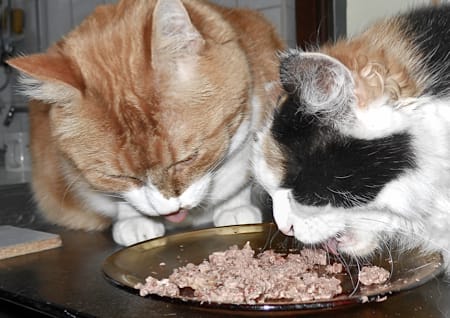
Cats need a variety of meats to stay healthy. Unlike humans and dogs, cats' bodies cannot produce the amino acid taurine themselves and must therefore obtain it from food. Meat contains large amounts of taurine, which regulates the cat's heart rhythm, digestion and vision.

Poultry
Poultry meat such as chicken, turkey or duck are important sources of protein for cats. Chicken and turkey are among the lower-fat types of meat, meaning they have fewer calories and a high protein content. Many cats like the flavour of duck and chicken, but these have a higher fat content and should therefore be fed less frequently. Raw poultry meat should always be pre-cooked to destroy pathogens such as salmonella and campylobacter jejuni.
Fish
Almost every cat likes to eat fish. If the cat is given fresh fish, the intake of salmon and tuna should be limited, as these often contain more mercury. Halibut, cod and flounder generally contain less mercury.
Tinned fish usually contains a lot of sodium and should therefore not be fed daily, but only as a snack between meals.
Beef
Beef is abundant in dry and wet cat food because it is relatively inexpensive and provides cats with important nutrients. Beef is also easy for cats to digest. Fresh beef should only be fed cooked.
Pork
Although cats are allowed to eat pork, it is not one of the best foods. Pork is very fatty, especially ham and bacon. Many pork products are smoked or cured and the added salt is bad for the cat's digestive system. Only cooked, unseasoned pork should be fed.
Lamb and veal
Lamb and veal are very tasty but also very high in fat and should only be fed in moderation. Too much lamb or meat can cause stomach problems for the cat.
How much meat should you feed a cat
The amount of food depends on the cat's appetite and nutritional requirements. In general, a cat should get 20% of its daily calorie intake from pure meat. The main food for cats should consist of special dry food for cats, which already contains the most important nutrients for the cat. Dry food is important as a staple food and for dental care.
As a general rule, a cat should only be given fresh, unseasoned meat without sauces.