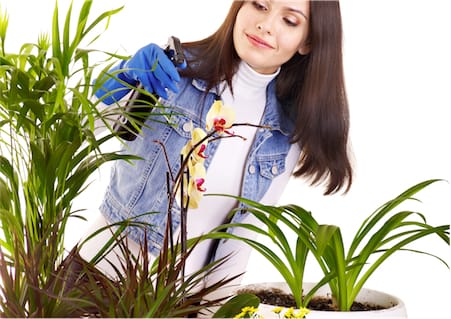
In greenhouses, many plants can be infested with tiny pests that are difficult to recognise with the naked eye. With a newly purchased houseplant, these pests enter the household and continue to damage the plant and all other plants in the house. Plants that spend the summer outdoors can also bring larger insects into the house. How do you get rid of pests on houseplants?

Larger insects can be picked out of the plant by hand. If you are disgusted by the insects, you can carefully take the plant outside and brush the insects off with a soft brush.
The small pests are more difficult to remove and you often only realise that the plant is infested when the leaves are damaged. Depending on the plant, you can try to rinse it thoroughly under a strong jet of water, for example in the shower, or wipe the leaves individually with a damp, soft cloth.
Pests that cannot simply be washed off must first be killed. This can be done by soaking a cotton wool ball in alcohol and running it over the infested leaves.
The two most common types of plant pests, moth scale insects and spider mites, can be removed by changing the watering routine. Moth scale insects are tiny flying insects that fly up when the plant is shaken. They breed in the potting soil and damage the roots. As the larvae are in the soil, the soil should be allowed to dry out before the plant is watered. Of course, care must be taken to ensure that the plant does not wilt.
Spider mites prefer dry soil and dry plants. They can be recognised by the web-like tissue that forms underneath the leaves. To get rid of spider mites, keep the potting soil moist at all times and spray the leaves of the plant frequently with water. Plants with smooth leaves can be wiped with a soft cloth and mild soapy water. Plants that cannot tolerate too much moisture usually need to be treated with an insecticide.
Insecticides are needed if conventional household remedies do not work and the plant is still infested with pests. It is best to seek advice from a specialist retailer as to which insecticide is suitable for your houseplants. There are products with less toxic ingredients such as insecticidal soap, neem oil, pyrethrins and pyrethroids.
Before buying a houseplant, you should thoroughly inspect the leaves. The leaves should not have any spots and should not be yellowish, as these are signs of insect infestation. Particular attention should be paid to the undersides of the plants, where pests usually hide. New plants should be placed individually for a month before they are placed together with other houseplants to prevent the infestation from spreading. A distance of one metre between the plants is sufficient.