A dishwasher also needs to be cleaned regularly so that dirt residues from previous wash cycles are removed and do not stick to the crockery. If you notice that some of the dishes are still dirty after the wash cycle, it is time to clean the dishwasher.

When washing dishes by hand, they are mainly cleaned by scrubbing with a sponge or brush. The dishwasher sprays hot water at 60 to 70 degrees onto the crockery and cutlery. The dishwasher detergent helps to remove the dirt. Pure water rinses away dirt residues and detergent from the items. However, if old dirt residues are stuck in the washing system, they are distributed with the water on the crockery, where they are caked on during the drying process. The dirt is deposited in the sieve and in the rinsing arm.
You don't necessarily need a special dishwasher detergent to clean the dishwasher. Vinegar, bleach and a citrus drink can be just as effective.
Firstly, the sieve must be removed and any food residue removed. Food residues stuck in the rinsing arm often block the water nozzle; if larger pieces are stuck there, the rinsing arm must be removed and cleaned until the spray nozzles are free again.
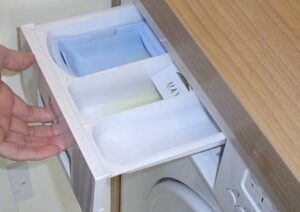
A tablespoon of bleach can be added to the dishwasher compartment, but only use it without dishes. The empty dishwasher is now switched on and should run through a complete wash cycle. The bleach removes mould that may have formed due to the moisture inside.
Half a cup of orange or lemon juice can be used to remove discolouration. The citric acid dissolves limescale deposits. The juice can be added to the normal dishwashing cycle.
A cup of vinegar can also be rinsed. The acetic acid helps to clean the entire interior of the dishwasher. Vinegar is one of the simplest and yet very effective methods for regularly cleaning the dishwasher. Vinegar can be routinely added to the dishwasher. Tip: Adding a little vinegar to the rinse aid compartment instead of rinse aid makes the crockery and glasses just as shiny.