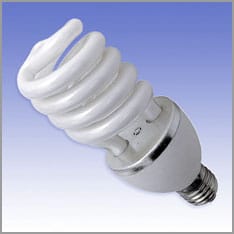
 By 2012, energy-saving lamps should have completely replaced conventional light bulbs.

But there are some questions about energy-saving lamps. What should one pay attention to when buying energy-saving lamps?
Energy-saving light bulbs are more expensive
The purchase costs of an energy-saving lamp are significantly higher than those of an incandescent bulb. Nevertheless, it is worth it because the energy-saving lamp consumes up to 80% less electricity and has a significantly longer life.
You can save up to 100€ in electricity costs per lamp over the entire life of the energy-saving lamp.
Energy-saving lamp performance
A conventional 100 watt light bulb is replaced by an energy-saving lamp with only 20 watts,
a 60-watt light bulb with an 11-watt energy-saving lamp and a 40-watt light bulb with a 7-watt energy-saving lamp.
There are different light colours and there are energy-saving lamps that start quickly without a long pre-glow.
So-called warm-white lamps are suitable for living rooms and bedrooms because they are not too glaring. The light colour is indicated on the package by numbers. For warm colours, the numbers 827 or 927 are recommended. A light temperature is also indicated, which in this case should be below 3300 Kelvin.
Glaring energy-saving lamps for offices or basements, so-called daylight lamps, have the numbers 860, 865, 960 or 965.
Lifetime of the energy-saving lamps
An energy-saving lamp lasts up to 15 times longer than an incandescent bulb. The lifetime of the energy-saving lamp is also indicated on the package. A good energy-saving lamp has a life of up to 15000 operating hours, while cheaper ones may only have 6000. So it is well worth buying a more expensive lamp if it lasts more than twice as long.
Disposal of energy-saving lamps
Energy-saving lamps contain mercury. That is why you have to hand them in as hazardous waste at the recycling centre.
If an energy-saving lamp breaks, do not vacuum up the contents, but put them in a bag and dispose of it at the recycling centre. Please wear household gloves when sweeping up.
Then ventilate well for half an hour.