The bathroom is a damp room, which is why stains and mould form on tiles and fittings after a while despite regular ventilation and cleaning. Here's how to make your bathroom sparkling clean again without harsh chemicals.

Cleaning tiles
Ceramic or porcelain tiles will shine beautifully if car wax is rubbed onto the surface, left to work for about ten minutes and then polished with a dry cloth.
Use an eraser to clean stained joints between tiles. To do this, the joints must be thoroughly dry.
Rust stains can be removed with a little cleaning petrol. Apply a few drops to a cloth and rub the rust stains with it.
Bathtub, shower, washbasin and toilet
Lighter fluid removes dark, stubborn stains from porcelain.
A bathtub that has turned yellow can be rubbed with a salt solution to whiten it again. If necessary, add a little bleach to the solution and leave to work for a few minutes.
Apply a paste of cream of tartar with a few drops of ammonia to rust stains and leave to work for a few hours.
Ugly rings and stains in the toilet bowl can be removed with cream of tartar and ammonia. Leave the solution to work in the toilet for a few hours, then remove with a brush.
Wipe shower doors with a damp sponge and vinegar.
Put a sponge in an old nylon stocking and tie the end closed. This can be used to scrub porcelain basins.
Fittings
Detergent alcohol removes stains and deposits from bathroom fittings.
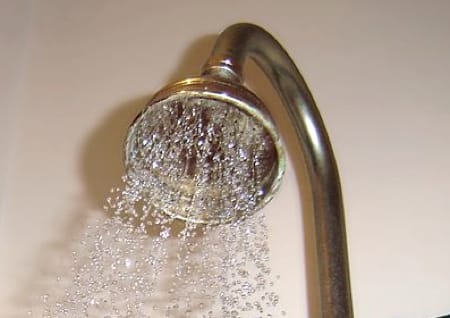
Metal shower heads can be cleaned of limescale deposits by boiling them in water and vinegar for a few minutes.
Plastic shower heads can be soaked in hot vinegar water. Leave for a few hours until the limescale dissolves.
Mould
Mouldy shower curtains can be washed out in hot soapy water and then rubbed with lemon juice. Leave to dry in the sun.
Mats
Scrub the bath mat with a hard brush and a solution of warm water and ammonia. Then allow to air dry thoroughly. Hang the rubber mats up to dry after each use to prevent the formation of mould and slag.
General tips for cleaning and avoiding steam
For a full bath, first fill the bath with five centimetres of cold water, then let the hot water run in to keep the water vapour to a minimum.
Before showering or bathing, cover the mirror, fold the mirror cabinet doors against each other or slide them behind each other so that no water vapour forms on the surface.
Briefly wipe the taps and shower wall dry after every shower. This prevents limescale deposits and removes dirt loosened by the water vapour.