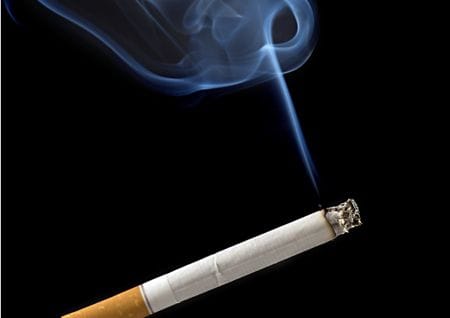
Despite the known health risks associated with smoking cigarettes, there are still millions of smokers. Many smokers try to quit, but unfortunately these attempts are often unsuccessful. The reason is usually that the overwhelming craving for a cigarette weakens the will and one submits to the addiction. This addictive craving for cigarettes is caused by the ingredient nicotine.

As with other addictive substances, nicotine accumulates in the body with every cigarette smoked until the body needs it. If you suddenly no longer give the body what it craves, it will want more. With nicotine addiction, this craving will continue until there is no more nicotine in the body.
90% of the nicotine that enters the body with a cigarette is quickly broken down in the liver and excreted by the kidneys. The remaining 10% remains in the bloodstream for 6-8 hours after smoking a cigarette. The amount in the blood depends on how much the person has smoked.
On average, 1mg of nicotine enters the body when a cigarette is smoked. Someone who smokes 20 cigarettes a day therefore has considerably more nicotine in their body than someone who smokes 5 cigarettes. The more cigarettes you smoke and the more often you smoke them, the more nicotine accumulates in your body.
In people who smoke up to 10 cigarettes a day, the body has completely broken down the accumulated nicotine after 3 to 4 days. For heavy smokers who smoke a packet or more of cigarettes a day, the nicotine can remain in the blood for up to 30 days if you stop smoking completely straight away.
Even if small traces of nicotine remain in the body for some time after the last cigarette, you can speed up the detoxification process somewhat. Water is the best remedy for any kind of detoxification of the body. The more water you drink, the faster toxins such as nicotine are flushed out of the body. Physical exercise stimulates the metabolism and therefore also helps the body to break down nicotine more quickly.