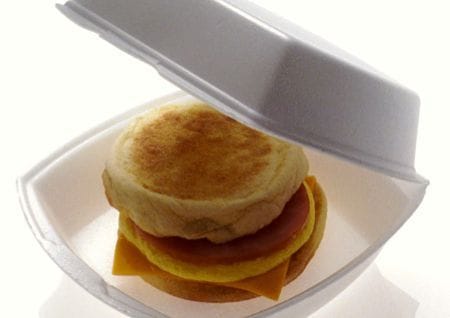
Styrofoam is a popular material for the production of disposable crockery. Many fast-food restaurants and vending machines use polystyrene for drinking cups and food containers due to the material's heat-insulating properties. However, polystyrene has its drawbacks: in the long and short term, it can lead to health problems.

Styrofoam is undoubtedly practical for food packaging, as it keeps food warm or cold and is still easy to hold. However, styrene, the main component of polystyrene, can migrate into the food. People who eat food from polystyrene containers four times a day over a period of three years have ingested the amount of styrene in an entire polystyrene cup.
Acute health problems due to polystyrene
Acute effects, i.e. those that occur immediately after consuming food and drink from polystyrene containers, can include skin irritation, eye irritation, breathing difficulties, headaches and indigestion. A polystyrene container does not contain enough styrene to cause acute symptoms, but people who work in polystyrene factories or have long-term contact with polystyrene can develop side effects.
Long-term complaints due to polystyrene
Even the intake of small amounts of styrene over a long period of time is associated with hormonal disorders and depression. Styrene behaves similarly to oestrogen in the body and can therefore trigger menstrual disorders and thyroid problems. Other possible side effects of styrene include blood disorders and chromosomal and lymphatic abnormalities. Styrene accumulates in the brain tissue, spinal cord and nervous system and can cause fatigue, nervousness and sleep disorders. Styrene is also suspected of being carcinogenic.
Environmental damage
The use of polystyrene containers leads to enormous amounts of waste. During the production of polystyrene, environmental toxins are released into the soil and the atmosphere. Almost 60 chemical by-products are released when polystyrene is incinerated.
Alternatives to polystyrene containers
Styrofoam containers should not be used at all at home or in the office. At home, only porcelain should be used and not disposable containers. When travelling, use special picnic containers that can be reused afterwards. Food that you take home from a restaurant or that is delivered in polystyrene containers should be transferred to porcelain containers as quickly as possible.
When shopping in the supermarket, you should avoid fruit, vegetables and meat products that are packaged in polystyrene trays.