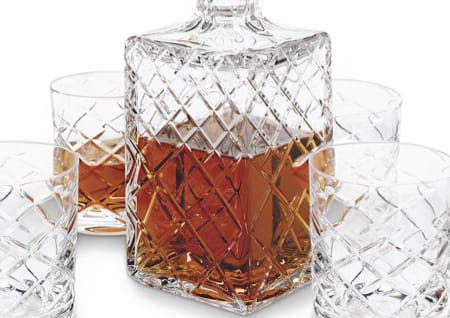
If you hold a carafe made of lead crystal up to the light, you can recognise that you have a valuable piece of glassware due to the refraction of the heavy crystal. However, lead crystal should only be used as decoration and not for food use.

Glasses and carafes made of lead crystal should not be used for food as they pose health risks. The extent of the risks depends on how often the lead crystal is used for food consumption and how old the consumer is.
Even small amounts of lead used in the manufacturing process can be hazardous to health. Lead is more dangerous for children as their bodies are still growing. Fortunately, children are rarely given a lead crystal drinking glass for fear that they might break it. In adults, lead can cause infertility in both men and women. Lead can also cause high blood pressure, nerve disorders, muscle and joint pain. It can also cause concentration problems and affect memory.
If food is stored in lead crystal containers, small amounts of lead are transferred to the food. It is particularly dangerous to store wine in a glass carafe made of lead crystal over a longer period of time, as small amounts of lead can constantly pass into the wine.
Acidic foods absorb lead more easily, including fruit juices, soft drinks and wine. Solid food eaten from a lead crystal plate usually contains less lead than the prescribed limit. In the case of liquids, the amount of lead absorbed is often up to one hundred times higher than the limit value. Lead is stored in the body and can lead to a reduction in red blood cells over the years, causing health problems.
If you don't want to do without valuable glassware on your dining table, you can buy lead-free crystal glass instead, which uses barium oxide instead of lead. Lead was originally used in the manufacture of glassware because it makes the glass easier to work with and creates aesthetic lighting effects. Barium oxide produces the same lighting effects, but is much lighter in weight than lead crystal.