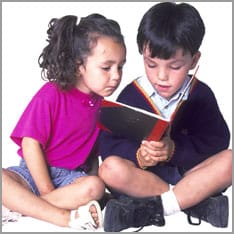
Nowadays, parents want to help their child learn as much as possible. This also applies to learning to read. If you get it wrong, your child may resist reading for the rest of their life. However, if you do it right, you will make it easier for your child to start school and give them joy for life.
Tips on how parents can help their children learn to read.
Read often yourself. If your child sees that reading is an important part of life and that it is something that you, their role model, enjoy doing, they will want to emulate you. You can't expect a child to start reading if they never see you do it.

Start early. Children need books before they start reading. With picture books made of cardboard or fabric especially for toddlers, your child can learn to turn the pages at an early age. Unfortunately, there are still many children who have never seen a book until they start school.
Incorporate reading into your daily routine. Read your child a bedtime story before going to bed. Read what the child likes to hear, even if it is the same story over and over again. The familiarity of the words will increase self-confidence.
Become a member of a public library. Your child will need a lot of books and they are not cheap. As the child gets older, he can choose his own books there. This will give them self-confidence and a sense of responsibility.
Listen to your child read. Let the child read small texts aloud, but not too much at once. Be patient and don't be too critical. Praise the child frequently.
Find out what learning methods are used in the school so that you can support this method.
Make time for your child. Even if the teachers at school are paid for it, they don't have the time to look after each child individually.
Give your child a book together with the corresponding audio book. Let them read aloud together with the audiobook. This allows the child to read texts that are a little too advanced without losing confidence. The audiobook method also gives the child a sense of independence.
Don't organise learning to read as a lesson, but as a game. Emphasise the words with gestures and sounds.
Explain the meaning of the words you have read to the child and show them individual objects that they have just read about.
Keep books in a place that the child can reach on its own.
Use the reading time to be close to your child and spend valuable time together.
Reluctant children can often be encouraged to read with reading material that is less demanding, such as poems, short stories, fables, comics and colourful illustrated stories.