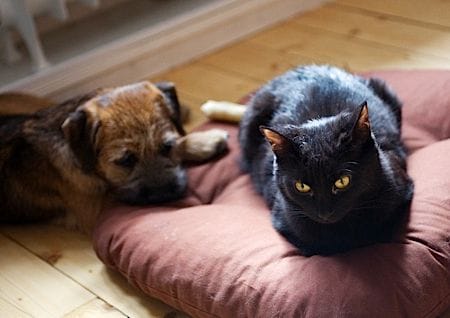

When a dog or cat is sterilised, the operation must be performed under general anaesthetic. It is important for the pet owner to be aware of the risks of such an operation.
The animal is anaesthetised and cut open. As with any medical procedure under general anaesthetic, there are also risks involved in sterilisation. There is always the theoretical possibility that an animal will not wake up from the anaesthetic, as every body is different and reacts differently to the anaesthetic. The mortality rate due to a general anaesthetic is approximately 0.1%.
During the operation itself, infections, inflammation or internal bleeding can occur, which of course always pose a risk to a living being.
Sterilisation yes or no?
Although dog or cat owners should be aware of the risks involved in sterilisation, this does not mean that they should generally refrain from it. In most cases, sterilisation leads to a happier and more balanced life for the animal, as it does not suffer from the hormonal surges of sexuality, which it then cannot live out. In other words: an animal suffers when it is "hot" and not allowed to have a mating partner.
It is particularly important for free-roaming dogs and cats to be sterilised to prevent them from having unwanted offspring.
So the important thing for the pet owner is not to decide whether sterilisation should be carried out, but which vet to go to. Once you have decided that it is better for the animal and owner if it is sterilised, you should look for a vet with a good reputation and a modern practice and talk to other pet owners rather than looking at the price. It also makes sense to have the animal examined and advised by the vet in question beforehand. The vet is best placed to decide whether the animal's health is strong enough to safely undergo such an operation.