Which Pet The right pet for you depends on your available living space, income and what you expect from a pet.

Find out which of the following common pet species suits you and your lifestyle.
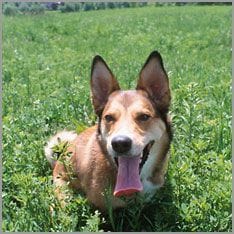
Dogs:
Time and care: Smaller dogs (Lapdogs) take up less space and can also be kept in flats. Nevertheless, they need daily walks to run around and go for a walk.
Larger dogs need more space in their home. They are more suitable for flats or houses with a garden. They also need to be walked regularly.
How many: A dog is fixated on its owner and can therefore be kept very well on its own as long as its carer gives it enough attention.
Family suitability: Most dog breeds are extremely good family pets, in fact there are only a few exceptions, such as the so-called fighting dogs, which do not have to be really dangerous, but with which you should be careful when dealing with children.
Costs: Apart from regular vaccinations at the vet, a dog doesn't need much more than its daily food. Nowadays there are very good and inexpensive feeds. However, you have to pay taxes for a dog, depending on its size and breed.
Expectations: You can train a dog as much as you like and teach him tricks. He is a good friend and a willing pupil. He can keep you company but also help with certain tasks.
Breed: There are 124 recognised breeds. There are also an infinite number of mixed breeds. The behaviour and character of a dog are not necessarily breed-specific. A mixed breed can be just as beautiful, intelligent, lovable and loyal as a pedigree dog. If you are not necessarily fixated on a particular breed, you should consider looking at a few dogs at an animal shelter. Perhaps the right dog is there and you have done a good deed.
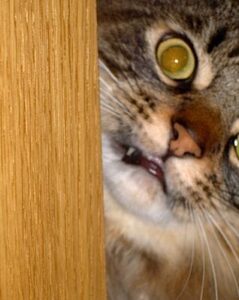
Cats:
Time and care: Cats are very independent animals and do not need a lot of time, provided their lives are varied enough. You can keep a cat indoors if they are used to it from an early age, they just need lots of different places to play and sleep as well as observation posts from which they can watch the world go by.
An outdoor cat also likes to sleep in the house with its owner. If possible, you should install a cat door so that the cat can come in and out whenever it wants.
In both cases, of course, a litter tray should not be missing, which usually needs to be refreshed every two days.
How many: A cat can live very well without a partner as long as it has close contact with its fellow humans. If you can't give the cat enough attention, it's better to keep two.
Family suitability: Cats are very friendly and extremely patient with children. They put up with a lot, but if it gets too much for them, they simply withdraw. As a rule, they keep their claws back around children, but you should be a little careful that children don't tease them too much if the cat does get too close.
Be careful with babies if the cat likes to sleep in the bed. Until the child is a little older, it is better not to leave the cat alone with the baby, as it could accidentally injure the baby if it jumps into the child's bed.
Costs: Vaccinations, food and cat litter. The cat is very frugal in its maintenance.
Expectations: Cats have a mind of their own. You have to take them as they are, they can't be trained.
Breed: The quieter Persian breeds are more suitable as indoor cats, whereas a normal house cat likes to be out and about all day.
Small animals in cages:
Time and care: Small animals such as rabbits, guinea pigs or hamsters are a good alternative if you don't have much space or time.
How many: With small animals that are kept in cages, you should always have at least two. It is best to keep two females or have the males neutered so that the population does not get out of hand.
Suitable for families: All small animals are very suitable for families. Children particularly enjoy rabbits and hamsters, who love to be played with.
Costs: A species-appropriate cage is absolutely essential. The right food, usually dry food and hay, is a must. However, small rodents are also grateful little "organic waste bins". They like to eat vegetable and fruit waste from the kitchen.
Expectations: If you spend a lot of time with your little companion, he will respond very quickly to the carer and can also be trained.
Breed: Whether rabbit, hamster, guinea pig or mouse is a matter of taste.
Fish and Reptiles:
Time and care: Aquariums and terrariums are ideal for small flats and are beautiful to look at. However, they can become a demanding hobby and require a lot of knowledge and time.
How many: There is usually more than one fish in an aquarium. How many fish fit in an aquarium depends on the size of the tank and the fish species. Enquire at the pet shop.
In any case, the spherical goldfish bowl, whether with one or more goldfish, should be avoided. These containers are not species-appropriate.
Family suitability: Aquariums are exciting for children, but you are usually on your own when cleaning them. An aquarium must be kept absolutely clean in order to guarantee the water quality, so you should not necessarily leave the maintenance in the hands of children.
Depending on what kind of reptile you intend to keep in a terrarium, it may not necessarily be childproof. However, venomous snakes should generally not be kept as pets at all.
Costs: Terrariums and aquariums can cause a lot of costs. The purchase costs of the tank, pump, heater, aquatic plants and fish alone are relatively high. To keep the water quality constant, you have to add additives to the water from time to time, depending on how good the water from the tap is.
Expectations: People generally only expect an aquarium to look nice and have a calming effect.
Breed: You should ask your pet shop which fish species go best together.
Birds:
Time and care: Birds are quite sensitive to temperature fluctuations and household gases. They need a large cage, a balanced diet, plenty of light and regular cleaning. If they lack anything, they will not sing or speak.
How many: Someone who has a lot of time for a bird and wants to teach it to talk can also keep just one bird alone, as two birds do not learn to talk. However, nowadays it is considered cruel to keep birds alone, as they need company.
Family suitability: Birds are great fun for children. A child learns a lot about responsibility when given the care of birds. Birds also love to "talk" to children.
Costs: Once a suitable cage and birds have been purchased, the maintenance costs for birds are very low. Ready-made dry food from the shops usually provides a balanced diet, and you can also give the birds pieces of fruit from the kitchen. Special bird sand is available for cleaning, which is very important because of its lime content.
Expectations: Birds bring colour, song and entertainment to life. With a lot of patience, parrot species can also learn to speak, although of course they only repeat sounds and do not understand the words themselves.
Breed: If you want a bird mainly for its song, the canary is the right one. Budgerigars are good entertainers and have a lot of personality. Otherwise, there are very beautiful, colourful and exotic birds, but they sometimes need special care.