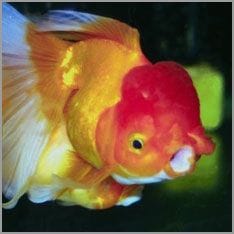
Many people think that goldfish are excellent pets for someone who does not want to invest much in pet care and has no interest in owning a pet for a long time.
Both the life expectancy of the goldfish and the level of bonding between goldfish and owner depend on how much care you give the fish and whether you know about proper goldfish care.

Goldfish are not necessarily short-lived. With the right care, a goldfish can even live for ten years or more (one goldfish is said to have lived to be 43 years old!). How do you care for a goldfish to give it a long and happy life?
The fish tank
No spherical bowl! Even if you only want to keep one goldfish, a large tank is important for the goldfish's quality of life. Not only are spherical tanks often too small for the fish, they also need sufficient oxygen supply through the water surface. The larger the water surface, the more oxygen the fish gets. A spherical glass that tapers towards the top allows less oxygen supply than a rectangular tank. You would also have to change the water in a spherical bowl every day to create a healthy environment for the goldfish.
The size
Goldfish start out very small, but can grow up to 30cm long with good care. Many new goldfish owners buy a small goldfish and a small tank and then have to buy larger and larger tanks as their goldfish grows. As a rule of thumb, a tank that holds between 75 and 100 litres for one goldfish, plus 40 litres for each additional fish. They not only need space to grow and a large volume of water for sufficient oxygen, but also enough room to swim.
Lid
Goldfish can jump out of the fish tank if it is open. A lid on the aquarium prevents this danger and provides space for a light source.
Light
Fluorescent lamps are preferable to conventional incandescent lamps. Not only do fluorescent lamps consume less electricity, they also heat up less than incandescent lamps. The light should burn for around 10 hours a day.
Gravel
A gravel bed is the best choice for the bottom of a goldfish aquarium. Gravel does not affect the pH value of the water and provides a good surface for beneficial bacteria to decompose the faeces.
The water
Tap water is generally suitable for goldfish as long as it is pH neutral. You can measure the pH value of the water with an indicator, which is available in larger pet shops. On a scale of 0-14, the pH neutral value is 7. The ideal water for goldfish has a pH value between 7.2 and 7.6.
There are pH neutralising tablets that can be added to the water to achieve the optimum value.
Changing the water
The tap water should stand still in a container for a full day before it enters the pool. This reduces the chlorine content of the water and the water temperature adapts to the room temperature.
A good filter system in the aquarium keeps the water clean for one to two weeks, after which you should replace two thirds of the tank contents with fresh water. It is best to take a hose, suck it full of water and let the old water run out. Move the end of the hose back and forth like a hoover just above the gravel bed to get the slag out. Swirl up the water a little first.
The stagnant water and the remaining third in the tank are important to avoid giving the fish a shock when it suddenly enters a new atmosphere.
Filter system
Goldfish produce a lot of waste products which, together with uneaten food and rotting plants, increase the ammonia content of the water. Ammonia is toxic to goldfish and should therefore be kept as low as possible. This can be achieved by promoting the beneficial bacteria in the aquarium and installing a good filter system. Filters must be cleaned regularly about once a month and the filter material replaced in order to achieve an optimum effect. The ammonia content can also be measured using an indicator.
There are three types of filters: chemical filters, mechanical filters and biological filters. You can also choose between external and internal filters.
Chemical filters such as activated carbon are used in the filter system to filter ammonia and other toxins out of the water.
Mechanical filters are highly absorbent filters that filter out slag and food residues to prevent the water from being poisoned in the first place.
Biological filters are the beneficial bacteria that convert ammonia into nitrite and then into nitrate, which is non-toxic.
Whether an internal or external filter depends primarily on the size of the tank and the number of fish. Larger tanks with lots of fish need more powerful filter systems; external filters are generally more powerful than internal filters.
The lining
A goldfish eats meat and plant food in the wild. The easiest way for the new goldfish owner is to buy ready-made food for goldfish and feed the goldfish small amounts several times a day. If most of the food cannot be eaten within 5 minutes, it is too much and the food residue that sinks to the bottom will contaminate the water.
You can also buy tasty treats such as frozen worms, peas or insect larvae.
Air outlet
Air diffusers make the aquarium look more interesting and fish like to swim around between the air bubbles. But they also support the oxygen supply as they keep the water moving and therefore make a significant contribution to keeping the water clean.
Decoration
The goldfish will not appreciate the aesthetics of the decorations in the same way as the viewer of the aquarium, but fish like places where they can hide and obstacles that they can swim around, such as stones, plants or figures. The prerequisite is, of course, that the decoration is suitable for the aquarium and has no sharp edges.
Plants
Living aquatic plants also help to maintain a healthy ecosystem, provided they are healthy. Rotting plants pollute and poison the water. For each aquatic plant, find out under which conditions it thrives best and only use plants that are suitable for your aquarium and your fish.
Goldfish and other fish species
If the aquarium is large enough, goldfish generally get on well with other fish. A goldfish can also live well on its own, but it will be more active in the company of other fish.
Contrary to popular belief, a goldfish recognises its owner and is happy to receive attention. Treat your goldfish well and you will enjoy it for many years to come!