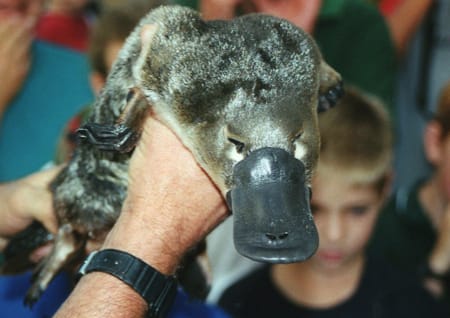
The platypus is a mammal from Australia with a body structure reminiscent of an otter. It has webbed feet and takes its name from its duck-like beak.

Platypuses are omnivores, which means they eat animal and plant food. They gather their food mainly at the bottom of rivers and streams. With their beaks, platypuses scoop up insect larvae, worms and water fleas. Their diet also includes small fish, fish eggs, snails, crabs, tadpoles and molluscs.
The platypus has skin folds that allow it to completely seal its eyes, ears and nostrils under water. This enables it to spend a full minute underwater without breathing, without getting water on its mucous membranes. It eats about a quarter of its body weight in grams per day and spends up to 12 hours foraging.
The platypus' beak is not only used to take in food, but also to help it find its prey. It is very sensitive to electrical signals emitted by its prey.With its food, the platypus picks up small grains from the ground, which it needs to crush the food, because the platypus has no teeth.