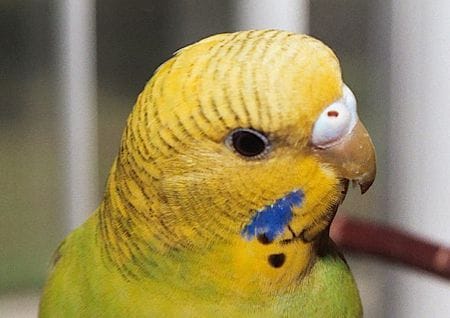
Many birds can be taught to speak. However, this only means that the birds learn to repeat spoken words, not that they can communicate verbally with humans. In order to understand the bird, humans must learn the bird's body language, as this is how the bird expresses its health and contentment.
If you observe your bird often, you will get to know its behaviour patterns, habits and movements. A deviation from normal behaviour is a serious sign that something is wrong. A contented and healthy bird has feathers lying smoothly against its body when active, occasionally stretches its wings to clean its feathers of mites and only fluffs itself up to sleep. Most domestic birds sleep on one leg while the other leg is drawn up and disappears between the downy feathers of the ventral plumage. A bird that sits fluffed up on the perch or on the ground during the waking phase is sick or unhappy. By fluffing up, the sick bird is trying to regulate its body temperature. Balance problems mean that it cannot sleep on one leg as usual. A very sick bird sits on the floor of the cage and is apathetic. In this case, it must be taken to the vet immediately.
A healthy bird demonstrates curiosity by scrutinising new or unknown objects. To do this, it puts its head on one side.

The sounds the bird makes also reveal a lot about its health. A healthy and contented bird chats during the day, especially if the background noise around it is increased by conversation, music or television. After covering the cage for the night or during its rest periods during the day, the bird sits on the perch and crunches its beak. A bird under stress will often squawk.
Aggressiveness is characterised by restless wandering back and forth with a nervously nodding head. This means that the bird is getting ready to fight. A bird that is ready to fight often has dilated pupils.
Readiness to mate is usually signalled by similar movements, but a bird that is ready to mate beaks its partner. Aggressiveness is not part of the love rituals. Birds in love feed each other by one bird regurgitating the food it has swallowed and giving it to its partner in its beak, as when feeding young birds.
Male birds often rub their rump against the perch, while female birds stretch their tail upwards to show that they are ready to receive.