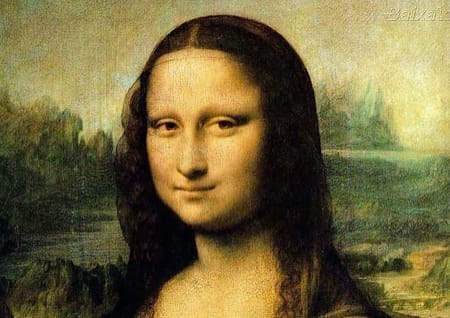
Painting reached a peak in the Renaissance like in no other era. Painting, which until then had mainly been used to decorate architectural buildings, also gained an independent significance and was now no longer regarded as a craft but as an art.
The newly discovered perspective representation enabled painters in particular to depict scenes and people realistically and three-dimensionally on canvas and wall paintings. The newly developed oil colours made it easier for painters to mix the right shades of colour for a realistic depiction.
Sketches were made on cardboard, which served as a template for frescoes, so that the composition of a picture was designed in the studio and then transferred to the wall.
In addition to lifelike and dynamic depictions, spatial depth, clarity, geometry and mathematics were important in Renaissance painting. This led to portrait painting gaining in importance. Artists focussed on expressing the individual personality. While piety was expressed in the Gothic period, the Renaissance emphasised the secular context and the appearance of the subjects. However, it was less about a superficial reproduction of the visible, as in a photograph, and more about the credible and realistic depiction of an idea. It was not the facial expression of the moment that was depicted, but the character of the person as a whole.

Although landscape painting had not yet established itself as an independent form, painters' interest in nature, animals and plants, the atmosphere of the sky and clouds increased. However, man remained the measure of all things and could not be excluded from the work of art.