 If the landlord gives notice to the tenant, this usually means that there is already tension between the tenant and landlord. It is therefore particularly important for the landlord to make his notice of termination legally valid and 'watertight' so as not to give the tenant the opportunity to take legal action against the termination.

As a landlord, you must observe the following in order to give notice of termination correctly.
The cancellation letter
It goes without saying that the cancellation must be made in writing.
If it is not an exceptional case in which termination without notice is permitted, the notice of termination must be given in due time in accordance with the tenancy agreement.
The notice of termination must be signed by the landlord himself, not by an authorised third party. If there is more than one landlord, all landlords mentioned in the tenancy agreement must also sign. All tenants named in the tenancy agreement must also be addressed.
If the notice of termination is issued by an authorised representative, e.g. a lawyer, an original power of attorney signed by all landlords must be enclosed with the letter of termination.
The letter of cancellation must be clearly drafted, i.e. it must clearly state which property is involved; the names and addresses of the landlords and tenants must be stated and that it is a letter of cancellation.
Delivery of the notice of cancellation
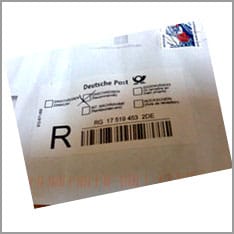
If the cancellation letter is sent by post, it must be sent at least as a registered letter, but preferably as a registered letter with acknowledgement of receipt. The cancellation is only deemed to have been officially delivered when the tenant has received it and countersigned the receipt.
If you want to make sure that the tenant does not find an excuse by not collecting the letter of termination or refusing to accept it, you have three further options for serving a legally valid notice of termination.
-
Personal delivery by the landlord
-
Delivery by courier
-
Service by bailiff
The landlord must be personally served in the presence of a neutral third party who can confirm the delivery in court as a witness if necessary. The witness must have read the letter of cancellation themselves. If delivery is successful, the date and time of delivery should be stated and signed by the landlord and witness. Spouses are also considered neutral witnesses if they are not named as landlords in the tenancy agreement.
If service is made by a messenger, the messenger must also be neutral and be able to testify in court if necessary. The messenger should of course also record the date and time of delivery.
The most secure method of serving the letter of termination is by a bailiff. The bailiff has the option of depositing the letter of termination even if the tenant is not present or refuses to accept it (Section 183 ZPO). In this case, the date of service is noted on a certificate of service, thus proving receipt of the notice of termination. The notice of termination is only legally valid in this case if it is served by a bailiff.