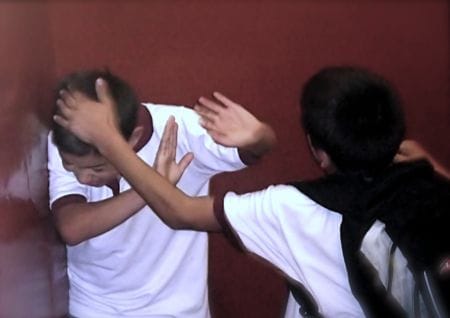
Teasing each other can be a lot of fun and even socially positive as long as both sides find it funny. All too often, the teaser does not realise that he has gone too far and his counterpart feels offended or the teasing has even turned into bullying. The step from teasing to bullying is very small and is often crossed unnoticed in the heat of the moment.

Teasing and teasing is playful banter and expresses affection and belonging. This teasing is very positive in interpersonal interactions. It builds or deepens friendships, shows affection or even resolves minor conflicts. In a larger group, friendly banter brings the individual members closer together.
Bullying is a type of hostile or aggressive teasing that is intended to hurt, humiliate or harass the other person. Obviously, this teasing has a negative effect because it creates aggressive tensions between people and promotes feelings of inferiority, anxiety and depression.
At first glance, teasing and bullying appear to be clearly separate. Teasing is good, bullying is bad and both seem to be done with deliberate intent. However, human character is much more complex, one's own deeper intentions are often unclear and teasing can be misunderstood. In general, those who are teased are more likely to perceive it as negative than those who make the jokes. Many people interpret well-intentioned teasing as teasing or bullying without the teaser realising it.
The interpretation of jokes depends on the individual person as well as their gender, character, popularity, self-esteem and previous experiences. Cultural background also plays a role. People from cultures that promote crowd harmony are less prone to negative teasing than those from a culture with strong self-discrimination.
Another factor is how a group of people perceives the teasing. While the same teasing has a positive effect in one group, it creates negative tensions in another group.
Regardless of this, any teasing can unintentionally be taken too far. The topic plays an important role here. Certain topics are too controversial in our society and should therefore never be the subject of jokes. These include appearance, sexual orientation, ethnicity, religion and race.
It is important for the person who teases others to observe the reaction and recognise warning signs in order to stop in time or to make it clear to the other person that there is no malicious intent behind it.