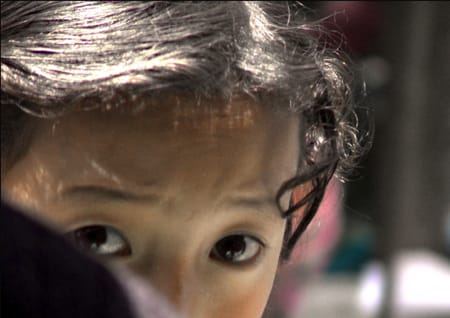
Some traits are innate, others are learned. Is shyness genetically predisposed or is shyness "made"?

Shyness is characterised by three main traits, namely extremely pronounced ego-consciousness, negative self-evaluation and negative self-deepening. These three characteristics presuppose a sense of self, an ego experience. Ego-awareness only develops from the age of 18 months. Babies who are under 18 months old are not aware of their own existence. Since people are not born with a sense of self, they cannot therefore be shy from birth.
A child from the age of six months reacts to its reflection by trying to touch the baby in the mirror. However, it does not recognise the image as its own, but sees it as another baby. If you paint a red dot on the baby's nose, you can tell that babies from 15 to 18 months are reaching for their own nose, that is, they are aware that they are looking at themselves in the mirror.
While there is no doubt that shyness is not innate but learned, people are nevertheless born with biological traits that influence their behaviour from an early age. Babies born with what is called temperament inhibition overreact to external influences. In babies, this reaction is characterised by a higher pulse rate, prolonged crying in response to loud noises, and increased kicking and hitting. At the age of two, children with congenital temper inhibition are seen to hide behind their parents when a stranger comes along. Seven to eight year olds with temperament inhibition are more likely to be seen playing alone. Such behaviour is called shyness by parents and teachers.
Temperament inhibition is an inborn trait, but it does not necessarily lead to shyness. Children with this inborn trait are more likely to become shy. In most cases, shyness is learned through the reaction of people around them to their inhibited temperament. The more often a person who is already strongly self-conscious is labelled "shy", the more withdrawn they become.