
There are different forms of fear. Fear is a survival instinct of all living beings. The body's reaction to a potentially dangerous situation is fear, which motivates it to escape from the danger zone. Without fear, no living being would be careful and prudent enough and would not survive for long. Escaping from a dangerous situation often requires fear, because fear "gives wings" and activates reserves of strength, even when the body is tired and battered. These are the basic forms of fear:
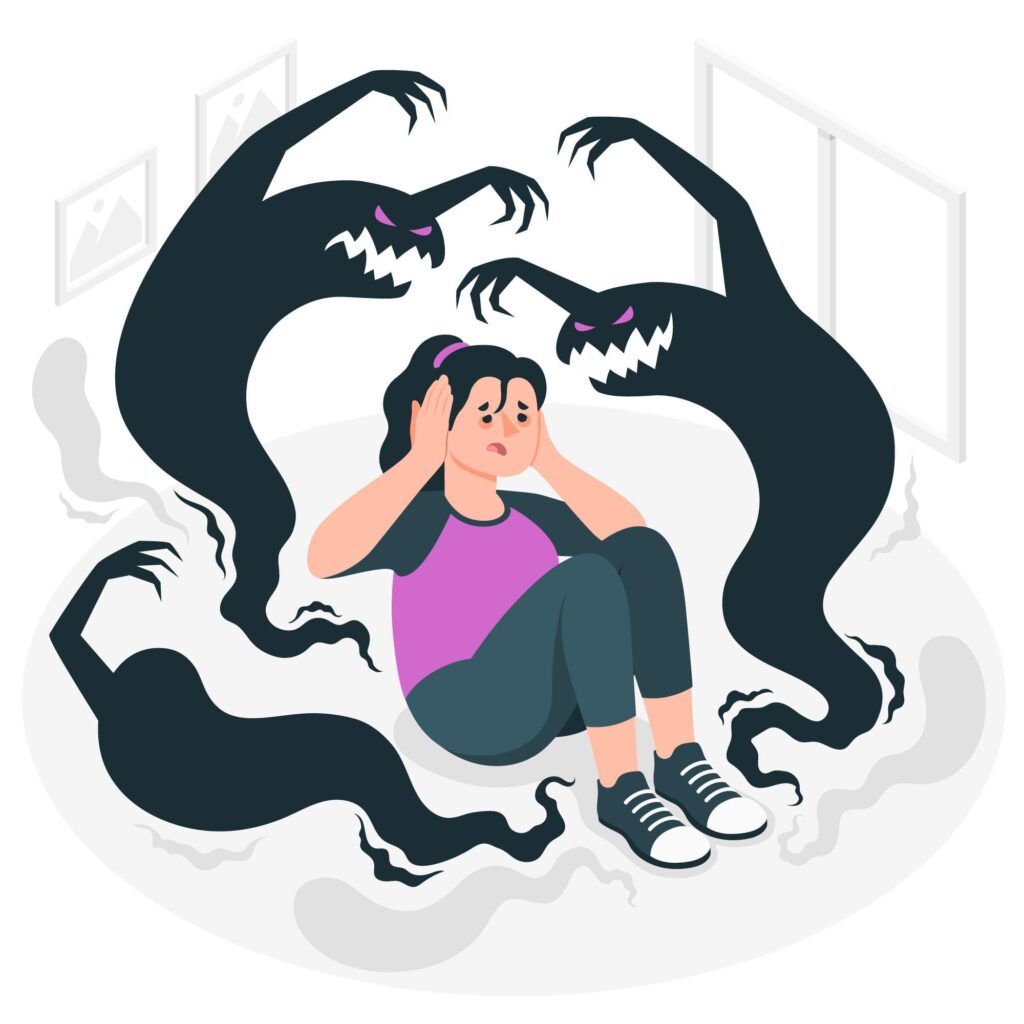
How fear manifests itself in the body
In acute anxiety, chemical reactions take place in the body that lead to typical symptoms such as shaky hands, heavy sweating, rapid heartbeat, increased pulse and rapid breathing. The symptoms can last from a few seconds to several hours. As soon as the brain is given the all-clear, the hormones released are reduced and the body normalises.

Anxiety can take a lot of different forms and ranges from mild worry to extreme horror.
Forms of fear
Worry. We worry when we fear that something bad could happen, whether justified or not. Worry does not have an acute anxiety trigger, but is a thought process of the brain that considers various outcomes of an impending situation and often visualises the worst possible consequences. In a state of worry, even trivial things can suddenly seem frightening because you are more receptive to negative things. Worries are self-tormenting thoughts that make you feel insecure and disturb your calm.
Anxiety
Anxiety goes even further than worry. An anxious person shows disturbances in mood, thinking and behaviour. Anxiety causes tension in the body and provokes a feeling of acute fear, danger or misfortune. You think something terrible is going to happen and you have to act immediately. Anxiety can become a behavioural disorder.
Horror
Horror is a strong feeling of fear in the face of danger. Horror often involves a prolonged period of fear that becomes a traumatic experience. Another form of terror is night terrors caused by nightmares or fear in the dark. A person can also show the same physical and psychological symptoms in non-real trauma situations as in an actual frightening situation.
Phobia
A phobia is an increased fear of certain things or situations. Phobias are usually irrational. The fear reaction when confronted with a spider in an arachnophobe produces chemical reactions in the body that can trigger a real state of panic, even if the person concerned theoretically recognises in clear thinking that there is no acute danger from the object. Among the forms of fear are phobias for
Typical phobias:
Typical phobias relate to flying (fear of flying), heights (fear of heights), lifts, water, snakes, bees, spiders, rats, syringes or even birds. People who suffer from phobias often have such severe anxiety attacks that the phobia intensifies, because they are not only afraid of the object in question, but also of the anxiety itself. Symptoms of such an anxiety attack include shortness of breath, sweating, chest pain, breathing difficulties and palpitations. The panic attacks subside within 30 minutes and leave the sufferer temporarily drained.
Paranoia
Paranoia (delusions of persecution) is a form of schizophrenia. The paranoid person is convinced that someone is after them and wants to harm them. Paranoid fear is irrational. Paranoid people often show extreme hostility towards other people because they believe they have to protect themselves. Paranoia often leads to delusions and the person affected may suffer from hallucinations.
Horror
Horror is a form of fear. The difference to "ordinary" fear lies in the intensity of the emotion and the reaction it evokes in a person. Added to this is the expectation of the worst possible outcome. Minor fears generate a moderate level of anxiety and stress. Horror is an extreme reaction of a person to a situation that is so far outside the range of their previous expectation and imagination that it can make normal action for the event impossible.