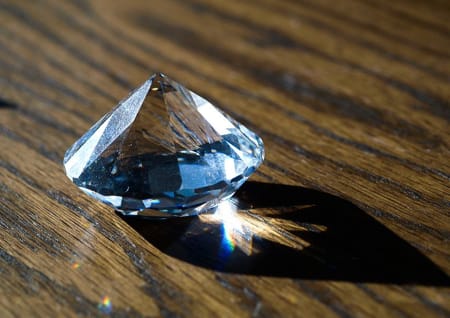
Diamonds need to be cleaned from time to time so that they do not lose their natural lustre. How to clean diamonds:

It is believed that diamonds were first discovered and recognised for their value around 6000 years ago in India on the banks of the Ganges. Diamonds have been used as jewellery and traded at high prices for thousands of years. The gemstones have a particularly beautiful lustre and light-scattering effect. Regular cleaning gives the diamonds more lustre and beauty, because the more dirt accumulates on the surface, the less the light will refract in the crystals and the stone will lose some of its brilliant effect.
In addition to dirt from the air, sebum from the wearer's skin accumulates on a jewellery diamond. Hair dye and skin lotions also contaminate the diamond.
Jewellers use steam to clean their diamonds. Numerous cleaning agents can also be used. The good thing about a diamond is that it is the hardest stone of all and therefore very resistant to chemicals and abrasive brushes.
Before cleaning, don't forget to close the drain hole in the sink so that no diamonds are accidentally washed down. It is even better to place a bowl in the sink to use for washing the gemstones. Fill it with hot water. Wear rubber gloves to protect your hands from the chemicals.
Add a detergent to the hot water. The diamonds are placed in the rinsing water and left there to soak for about 10 minutes. After ten minutes, remove the diamonds from the water and place them in a bowl filled with ammonia. Cover the bowl so that the foul-smelling vapours from the ammonia are not dispersed in the room. The diamonds are soaked there for a further ten minutes.
Now carefully brush off the diamonds with a soft brush. Depending on the size of the stones, an old toothbrush is recommended.
Now place the gemstones back in the rinsing water to remove the ammonia residue. Then leave them to air dry or dry them with a cloth.