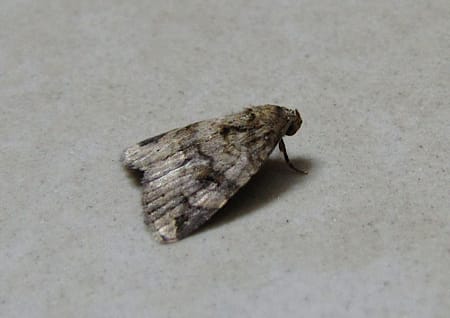
Moths in the wardrobe are considered a plague. Nevertheless, it is not the moths themselves that eat holes in the clothes and fabrics, but rather the moth larvae that feed on natural fibres and wool. How do moths get into the wardrobe? If you know more about the behaviour of moths, you can better prevent a moth plague.

Moths prefer dark and slightly damp places where they are rarely disturbed. Wardrobes, cellars and attics are therefore excellent breeding grounds, because the moths live in folds of fabric, where they also lay their eggs. If a moth is disturbed, it rarely flies away but looks for a new hiding place. Especially in summer, moths are active and looking for nesting sites, but in a heated house, moths can lay eggs all year round.
The eggs are tiny, about 1mm long, and barely visible to the naked eye. They adhere to clothing with a sticky substance. The hatched larvae are about one centimetre long and milky white. As soon as they hatch, they start feeding on the fabric fibres. Usually, garments made of wool, leather, fur, feathers and silk are infested. Clothing containing organic substances such as sweat, animal hair and food stains are also part of the moth larvae's diet. They feed on clothing fibres, up to the cone stage.
You can tell if there is a moth infestation if there are small holes in the clothes in the wardrobe. The holes are irregular and are located on garments that have been stored for a longer period of time. Another sign is if you see a moth flying in the house when the lights are dimmed. This often happens in summer when windows and doors are open. A moth rarely flies before laying eggs, so if you see a moth flying around, it may have already laid its eggs.
Wardrobes, carpets, curtains and shelves should be vacuumed frequently. Empty and clean the vacuum cleaner immediately after vacuuming. Infested clothes should be washed directly and hung out to dry in the sun. After drying, shake out and brush off again.
Clothes Carpets should be patted down or washed outdoors to remove any moth eggs and larvae.
Clothes that are stowed away for the season should be kept in airtight, disinfected containers and made sure they are well cleaned and dry.