Damp walls can damage the wall structure and have a negative impact on health. However, if you have damp walls, you do not necessarily have to tear down and rebuild the wall straight away, but can reduce the build-up of moisture and limit the damage by taking certain measures. Even if this is not necessarily a permanent solution, further damage can be minimised and the quality of living can be improved.
Excess moisture can cause condensation on interior walls. High humidity encourages the growth of mould, which can lead to asthma and allergies.
The ideal humidity indoors is between 30 and 50%. This prevents mould growth. Condensation changes the colour of walls and ceilings and is accompanied by an earthy, musty smell. Mould can be black, grey, green or white and forms in patches.

Dehumidifiers reduce the humidity indoors and remove water from the air. Other devices for dehumidifying the air are air conditioning, heating and fans, which blow the humid air outside.
A vapour protection film must be installed between the outer wall and the interior to act as a barrier against moisture penetrating from outside. Vapour barrier membranes are also laid under the floor surface in basements to prevent moisture from penetrating upwards through the concrete. As an interim solution, the film can be rolled out over the screed that has already been laid and a layer of cement placed on top. The final floor covering is laid over the new cement layer.
All interior rooms, but especially cellar rooms, must be well ventilated to prevent the build-up of moisture.
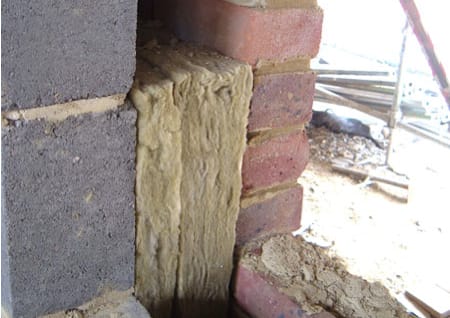
Interior walls can be covered with a layer of insulation to reduce moisture. This is particularly useful for damp problems in old buildings. A layer of thick glass wool, wood wool or polystyrene is laid on the wall. An inner wall made of plasterboard and profiles is erected in front of the insulating layer. This prevents moisture from penetrating into the interior climate.