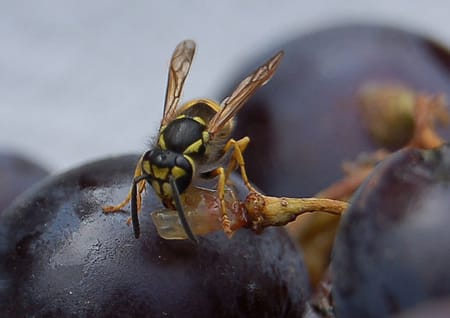
Wasps and bees have venom glands at the back of their bodies. The sting injects the venom into people and animals that wasps and bees feel directly threatened by. What happens when you find a dead wasp, can you touch it or can dead wasps still sting?

Even after their death, wasps can still bother you, so they should be treated with care. Before rigor mortis sets in, touch can trigger nerve reflexes where contact with the stinger will eject the venom still in the glands.
The greatest danger is with wasps that have only been dead for less than an hour. Until then, the venom glands pulsate automatically. But even after that, there can still be venom in the sting or in the glands.
Not every wasp that lies lifeless on the ground is really dead. A temporarily unconscious wasp can suddenly come to life when touched and attack the supposed attacker.
To be on the safe side, dead or lifeless wasps should be swept away with a broom or fished out of the water with a net.