It can pay off if you take a closer look at the plant world and copy it, as in the case of the Swiss George de Mestral.

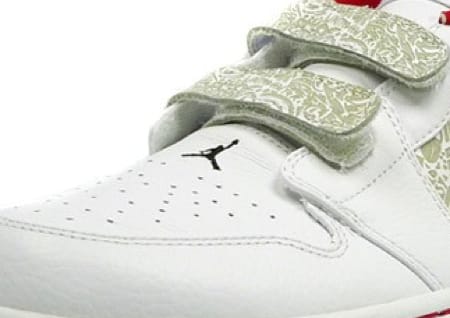
It is often mistakenly assumed that the Velcro fastener was developed as part of the American space programme. In fact, Velcro was invented in 1948 by the Swiss technician George de Mestral when he was walking his dog. When he came home, he and his dog were covered in burrs, which gave him an idea.
He plucked one of these burrs from his jacket and examined it under the microscope. The microscope revealed the secrets of this seed, namely the tiny hooks with which it attaches itself to fur or fibres, especially when it comes to clothing fabrics with tiny loops.
Mestral instinctively knew that the hook and loop principle could be used to develop a revolutionary fastener, but it took several years to perfect this invention. The greatest difficulty was getting the hooks into the loops correctly. He finally found the solution by sewing nylon under infrared light.
In 1951, Mestral was granted a Swiss patent for an early version of his Velcro fastener, which he called 'Velcro', a combination of the words 'velour' and 'crochet'. He opened his first factory the following year. In 1955 he received a US patent for his invention. Two years later, production of Velcro began in Manchester, New Hampshire. It wasn't long before the company was selling around 60 million metres of Velcro fabric per year.