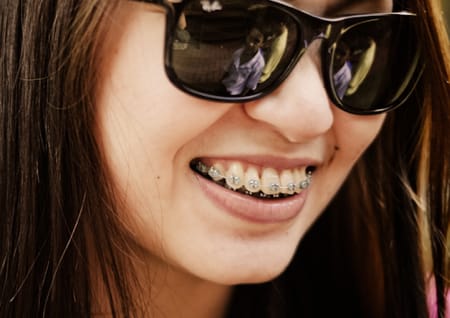
It is never easy for a child to deal with braces. Children have little interest in the future and therefore do not understand the logical arguments of adults regarding braces. It is important for parents to explain to children what to expect in order to make it easier for them to deal with braces.

How long do you have to wear the brace?
Braces are designed to move crooked teeth bit by bit until they are in the right place. The duration of treatment with braces depends on how much the teeth need to be moved. Fixed braces usually remain in the mouth for between 12 and 24 months. For severe problems, treatment may take longer.
Removable braces are usually worn for a shorter period of time, but treatment with fixed braces is often followed by treatment with removable braces. The treatment lasts longer if the child does not wear the braces regularly as instructed.
During treatment with braces, the orthodontist or dentist must be visited approximately every six to eight weeks. The orthodontist checks whether the teeth are moving correctly and adjusts the braces. These checks by the orthodontist are very important, otherwise the treatment will take longer.
How is the brace noticeable?
The mouth is very sensitive and needs a few days to get used to the foreign body in the mouth. As the braces exert pressure on the teeth to bring them into the correct position, there will be an unpleasant feeling in the mouth at first. Painkillers that are suitable for children, such as ibuprofen and paracetamol, can help relieve pain. Especially with fixed braces, the metal parts can cause temporary sores on the gums and palate. To counter this, the orthodontist will apply wax over the sharp points. If the discomfort persists, you should see your orthodontist.
Braces affect speech and the pronunciation of certain words. Lisping is a common occurrence of such disabilities. After a few days, however, you get used to it and learn to deal with it.
What should be avoided?
Chewing fingernails or pencils can damage the braces.
For sporting activities, removable braces should be removed and then immediately put back in the mouth. Depending on the type of sport, a mouthguard may be required for fixed braces to prevent injuries from the braces.
At the beginning, braces can be a hindrance when playing wind instruments, but this is also a matter of familiarisation.
For the first few days, you should eat soft food to help you get used to it. Sticky and highly sugary foods such as chewing gum and chewy sweets should be avoided for the duration of the treatment. You should also avoid hard foods such as raw apples, carrots and bread crusts, as these can damage the fine wires of the braces.
Carbonated drinks should be drunk with a straw, as the acids can damage the braces.
Oral care
Oral hygiene is particularly important with fixed braces, as food debris can get stuck in the braces and damage the teeth. Rinsing your mouth and brushing your teeth regularly prevents sore gums, tooth decay and decalcification of the teeth. Decalcification occurs when calcium is removed from the teeth.
The removable braces should be washed thoroughly after each use. It is best to rinse them under the tap. A separate toothbrush specially designed for cleaning the braces can be used to clean them thoroughly from all sides.
Loss of or damage to the brace
Removable braces can easily be lost. If they are lost or damaged, you should see an orthodontist immediately to get a replacement or have the damage repaired. If you wait until your next routine visit, the progress you have made so far may be set back and treatment may be delayed.