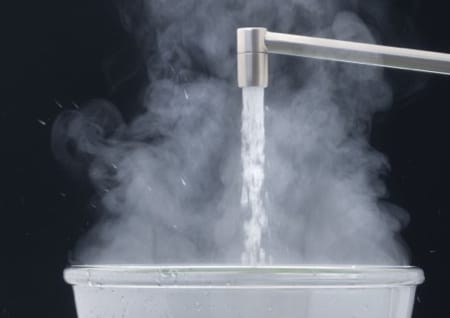
Steam baths are water treatments in which hot, steaming water warms parts of the body or the whole body. The vapours promote blood circulation by dilating the blood vessels and thus relieving the heart.

Head steam bath
A head steam bath is effective for colds, bronchitis, laryngitis, sinusitis and middle ear infections. Boiling water is poured into a covered, wide pot. Chamomile, sage, hay flowers, peppermint or eucalyptus can be added to the water. Place the pot on a chair and sit in front of it. Cover your head and the pot with linen cloths. The intensity of the vapour is regulated by opening the lid and moving the head away from the pot. The cloths should be lifted briefly from time to time to let in fresh air. After a 20-minute steam bath, rinse your face with cold water.
Foot steam bath
A foot steam bath alleviates the symptoms of colds, foot perspiration, arthritis and gout. Place the container with the boiling water and hay flowers on the floor and place a grid on top. Place your feet on the grid and cover them with a towel. After 15-30 minutes, briefly rinse your feet with cold water.
Abdominal steam bath
For metabolic disorders, prostate problems, kidney and bladder complaints, intestinal colic and menstrual cramps, add horsetail to the water. A hay flower supplement is effective for colds.
Place the container with the boiling water under a chair with holes in it. Sit on the chair with your lower body undressed and wrap up well with linen cloths and woollen blankets. After 20 minutes, go to bed to sweat or take a full bath afterwards.
Full steam bath
A full steam bath has a similar effect to a sauna and cleanses the body of toxins, stimulates the circulation, promotes blood flow and boosts the immune system. The full steam bath is carried out in the same way as the abdominal steam bath, but you sit on the chair completely undressed and wrap your whole body in linen sheets and blankets.
In Roman steam baths there is a whole sequence of hot air room, shower, massage and cleansing room.