Package inserts are written in a complicated way due to the laws on medicinal products. Unfortunately, this means that consumers often do not know how to understand the intake, dosage or side effects. Here is some help on how to interpret the package inserts of medicines correctly.

Time of ingestion
Before eating: Taking before eating means 30 to 60 minutes before the next meal. Some medicines work faster on an empty stomach.
With a meal: The medication should be taken during or immediately after a meal, as food protects the stomach lining from the aggressive ingredients in the medication.
After eating: The medication should be taken at least two hours after eating, i.e. at least two hours after the last meal. Some foods can slow down or interfere with the effect of the medication.
Dosage
Once a day: The medicine should be taken once a day at the same time each day. The intake time should not differ by more than two hours.
Twice daily: The medication should be taken every twelve hours.
Three times a day: take every eight hours, i.e. in the morning, at midday and in the evening.
Important when dosing: If you forget to take a dose, you must not take double the amount of medication the next time!
Side effect
The legally required information on possible side effects states how often they can occur. However, not everyone knows what "rare" or "frequent" means.
Individual case: This side effect occurs extremely rarely, which is why there is no more detailed information on the frequency.
Very rare: This side effect occurs less than 0.01%, i.e. once in 10000 cases.
Rare: This side effect occurs up to 0.1%, i.e. up to once in 1000 cases.
Occasional: This side effect occurs with a frequency of up to 1%, i.e. up to once in 100 cases.
Frequent: Frequency between 1 and 10%, i.e. one to ten times in one hundred cases.
Very frequent: Side effects are considered "very frequent" if they occur more than once in ten cases.
Name affixes
Medicines can have certain name affixes that indicate certain properties of the medicine.
Mono: There is only one active ingredient in this medicine.
Plus or Comp: There are several active ingredients in this medicine.
Forte: This medicine has a high dosage.
Mite: This medicine has a lower dosage.
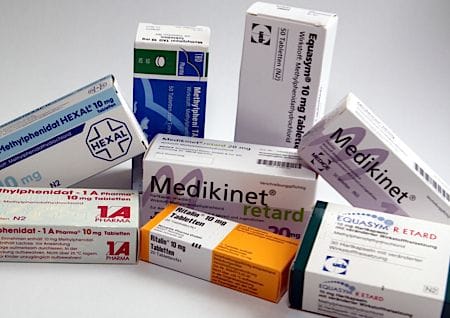
Retard: The active ingredient in this medication is released over a longer period of time. The effect is therefore delayed, but lasts longer.
N1, N2, N3: This refers to the pack size. N1 is the smallest pack, N3 the largest.