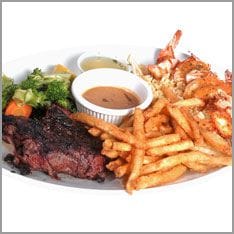
Now our appetite for fried, baked, French fries and crisps is not only spoilt for the well-known reasons of the threat of obesity, no, recently another factor has crept into the series of negative properties of these foods: acrylamide.
Haven't heard of it yet? Perhaps you shouldn't read any further if you are one of those who have indulged in the above-mentioned foods from time to time without a guilty conscience.
However, if you have become curious, you must accept that the knowledge of acrylamide could cause you to lose your appetite.

This substance is found in a variety of foods that contain starch and have been cooked at high temperatures, e.g. baked, deep-fried, roasted or grilled. Cooking methods with water, i.e. boiling and steaming, are less affected.
Animal experiments have shown that the substance acrylamide is carcinogenic, at least in rats. However, it is not yet known in what quantities. Nevertheless, it is recommended that as little acrylamide as possible be produced in order to minimise the quantities that enter the body.
How do you ensure that little acrylamide is formed?
The formation of acrylamide can only be reduced by lower cooking temperatures, i.e. everything that browns due to the cooking method is responsible for the formation of acrylamide.
This applies in particular to potatoes, meat, cheese, cakes and pastries, bread, rusks, crispbread, but also coffee and cocoa.
For products prepared at home, it is therefore important to lower the temperature, not to use oven temperatures above 200ºC, to fry only at up to 175ºC, not to sear and to use fats that do not allow overheating, such as margarine or oil with a little margarine.
Dark crusts and burns should not be allowed to form in the first place, but should be cooked at the right time and then switched off the hob or oven.
The rule is: "Do not char".
There are still no valid limit values, as research was only able to detect this substance in food a few years ago. So far, the recommendations cannot go beyond the above-mentioned tips, but it is still advisable to adhere to them in order to avoid a risk.
This applies in particular to the diet of children, who consume more food as a percentage of their body size compared to that of adults.