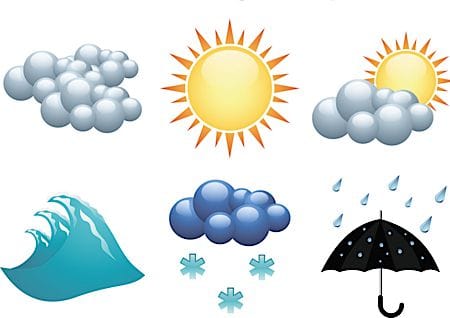
The climate of a region remains constant, while the weather changes daily. The weather and weather change is a natural stimulus to which the body adapts.

However, some people are more sensitive to changes in the weather and their organism takes longer to adjust to the changed weather conditions. Everyone is sensitive to the weather to a certain extent. Weather sensitivity should therefore not be seen as an illness. The intensity of weather sensitivity is essentially related to a person's physiological and psychological state. A healthy and balanced person generally has enough resilience to cope with changing weather conditions. Those who suffer from weather sensitivity cannot adapt quickly enough.
Around 30% of the population suffer from the effects of the weather in an increased or reduced way. Women in particular react sensitively to weather conditions.
The most common complaints suffered by weather-sensitive people are tiredness, unwillingness to work, loss of appetite, irritability, nervousness, concentration problems, loss of performance, headaches, migraines, flickering eyes, sleep disorders, pain from healed bone fractures, dizziness, palpitations, circulatory problems, rheumatic complaints, sweating and unfounded melancholy.
Depending on the intensity of the symptoms, a distinction is made between "weather-reactive", "weather-sensitive" and "weather-sensitive".
All people are weather-reactive, even weather-stable ones.
Weather-sensitive people are those whose autonomic nervous system responds more strongly to weather stimuli.
Weather-sensitive people are those who feel weather-related discomfort due to illness or injury.
People with scar, amputation and bone fracture pain as well as rheumatic conditions can even show physical reactions one to two days before the change in weather.