If you have a digital camera with manual settings, you should learn how to use them correctly to take good photos in less than ideal lighting conditions.

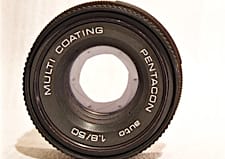
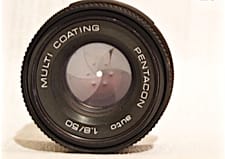
The aperture setting is probably the most important thing to understand when it comes to camera settings. Aperture priority is usually abbreviated to A or Av in the camera menu and is the most important mode for most amateur photographers outside of the automatic settings.
Exposure of the camera
Cameras need light for good photos. Daylight is best. Aperture and shutter speed together control how much light enters the sensor through the lens.
To let in more light, the aperture must be larger and/or the shutter must remain open for longer. The longer the shutter speed, the more light comes in.
The amount of light that hits the sensor is called exposure. Overexposed means that too much light has been let in, underexposed means too little.
To take a good photo, the exposure must therefore be optimal. In poor lighting conditions, the camera can be made more sensitive to light. This is achieved through the ISO setting. ISO stands for the light sensitivity of the sensor, the higher the number, the more sensitive the camera is to light. With a high ISO number, however, you will also see more impurities that can ruin the image. For beginners, it is better to master aperture and shutter speed first. Through trial and error, you will learn which setting gives you the desired result.
How aperture and shutter influence the sharpness of the photo
To make an image sharper, you need a greater depth of field. This means a smaller aperture, which in turn lets in less light. This must be compensated for by a longer exposure time.
The larger the aperture = more light = faster shutter speed. The faster the shutter speed, the sharper the moving elements of the image will be. Even stationary objects will be less affected by camera shake. The depth of field range will be smaller, i.e. only the elements that are directly in the focus ring will be sharp, the foreground and background will be blurred.
The smaller the aperture = less light = slower shutter speed. The longer the exposure time, the more blurred the photo becomes due to camera shake and movement. The depth of field increases, i.e. the foreground and background outside the focus ring become sharper. It is advisable to use a tripod for longer exposure times.
Summary
For a generally sharp image, use a fast shutter speed and small aperture.
Short exposure time for a photo with a sharp focus ring and blurred foreground and background.
Short exposure time for a sharp action photo.
Action photo with sharp focus ring short exposure time, open aperture.
For a generally sharp image in low light, longer exposure time on the tripod, small aperture.
For a photo with a sharp focus ring in low light, longer exposure time on the tripod, open aperture.