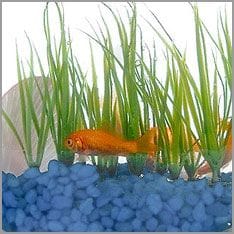
Setting up an aquarium is a science in itself and requires a lot of preparation. It is best to inform yourself and plan well, otherwise a beautiful hobby can quickly become a source of frustration, as mistakes often have disastrous consequences.
Preparation
An aquarium should have a capacity of at least 100 litres, smaller tanks are better avoided as they are more difficult to maintain as there is not enough space for a smoothly functioning biotope.

An aquarium weighs a lot because it is made of glass and contains a lot of water, so you first have to think about the right place to set it up.
It is also important to check whether there is a socket nearby, as lamps and filters need to be connected.
So before you start to set up the magnificent piece, you should have already selected and prepared the aquarium cabinet or other space.
It is best to place a foam mat underneath to minimise the risk of glass breakage.
Substrate
Gravel, which is available in various colours and grain sizes, is the first choice. It is best not to choose a substrate that is too light, as the fish should feel comfortable.
You can buy the gravel washed or clean it yourself, but the latter involves a lot of work.
The layer of gravel should be about 6-8 cm deep and you can use several types of gravel in layers
Accessories
Filters and lamps, usually tubes, a timer, water heating and a CO2 system are required. Some of these technical aids, such as cables and hoses, are hidden under the gravel.
Stones, roots and co.
It is best to buy ornamental wood and stones from a specialised dealer, otherwise diseases and fungi can quickly spread in the aquarium.
They are placed in front of the plants. The aquarium can then be filled up to half full with water.
Plants
The plants are first pressed deep into the gravel and then pulled out again up to the base of the plant. This keeps the root ends in the lower area.
Do not plant too densely, but also not too sparsely, preferably in groups and leave some areas free.
Tall-growing plants are placed at the back, smaller plants at the front.
There are also plants that spread out on the ground or those that float on the surface of the water.
Water
After planting, the aquarium can be completely filled with water. The following water qualities affect the fish and the entire small biotope, including plants and any algae growth, diseases and parasites. They must be tested and adjusted if necessary:
Temperature, pH value, oxygen content, nitrite level
Fish
Fish either live in shoals or as loners and are more or less demanding. Here, too, you should obtain detailed information before making your choice, as space is limited even in a large aquarium and the fish will choose their zones according to their needs. Some tend to live at the bottom, others between plants or hidden under roots and stones.
Too many fish with the same preferences will get in each other's way.
However, at least 2-3 weeks should pass before you can introduce fish into the new aquarium, otherwise they may quickly become ill and die because the aquarium biotope has not yet been run in.