

The right fishing equipment contributes significantly to the experience of fishing. If the fishing equipment is not suitable, the fishing experience can become frustrating and the recreational value of fishing is gone.
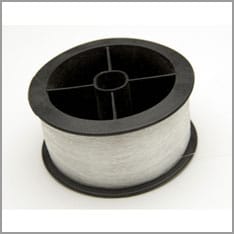
One of the most important items of fishing equipment is, of course, the right fishing line. The wrong fishing line often causes problems and it is not uncommon for the angler to lose a few fish.

There are four types of fishing line on the market. These are monofilament, braided, glued and fluorocarbon.
The most popular fishing line is monofilament line, as it is suitable for many different types of fishing. The problem with monofilament line is that it often stays in the shape it is stored in, which means it deforms easily. For someone who does not go fishing that often and keeps the line tucked away most of the time, a shorter fishing line is recommended, which should be changed more often.
Braided fishing line is the strongest and most resilient of the four types. It does not deform easily and is easy to see on the water because its braided structure makes it float on the water. However, it is precisely its stability that often causes abrasion both on hands and on the fishing rod and reel. To minimise this abrasion, the angler should have a suitably robust fishing rod and spool as well as sturdy gloves.
Fused fishing line is about the same as braided. The only difference is that the strands are not braided during manufacture, but fused or glued together. This makes it difficult to cut the fishing line without a special knife. Like braided fishing line, glued fishing line is easily visible, making it difficult to catch fish.
Fluorocarbon fishing lines are becoming increasingly popular these days as they are almost invisible to fish in the water.
More about fishing here.


