
One of the most important lessons children need to learn is how to handle money. Not only does the child itself benefit from understanding the value of money at an early age, it also helps parents to deal with unrealistic expectations of the child during its childhood.
The financial situation is different in every household. Some families have more disposable income than others. However, the amount of disposable income should have no influence on teaching the child to manage money. This is what pocket money is for.
For very young children, you can use toy money instead of real money, which can be exchanged for goods with the parents. The child learns that money is not inexhaustible, once it has been spent, it is gone.
Most children have their first experience with "real" money when they receive their first pocket money. Even very young children (from the age of 3) can be given their first pocket money, which they can use to buy whatever they want. However, for such young children the amount should be small according to their age. It is important that they regularly receive the same amount of money with which they have to budget.
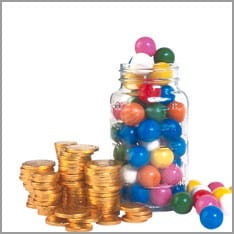
In the beginning, all children will probably spend their money directly on toys or sweets. They must first learn over time that they can keep the money and save it to buy something bigger. To do this, it is important that no parent gives them extra money when they ask for it.
Once the child understands the concept of saving their weekly or monthly pocket money to buy more expensive things in the future, you can start to open their own bank account for them. Take the child to a bank counselling session and let them be part of the conversation so that they understand the process and the benefits of the savings account.
Learning to manage money properly is not easy, especially for a young child, but it will benefit them in their future. Many children are also proud when their parents give them responsibility and show confidence by giving them their own money early on.