Children learn better through positive reinforcement than through prohibitions and reprimands, which means that positive behaviour should be praised and negative behaviour should be shown but not severely punished.

Praising good behaviour imprints a positive feeling in the brain, which strives to display similar behaviour in the future. Excessive scolding, shouting, punishment and spanking only ensure that the child becomes defiant and rebellious, but does not try to change its behaviour. On the contrary, the child learns not to get caught with such behaviour or to deal with the punishment.
Even though it is often difficult for parents to get work done and do everything at the same time as their children's nagging questions, there are some things you should never say to your child, because the child doesn't understand the situation and takes the bad words to heart.
In an overstimulated situation, many parents say the wrong words and hurt children's feelings. In a way, this is an important part of learning, because children need to realise when they are crossing the line in order to make coexistence within the family possible. Nevertheless, you should endeavour to replace the following verbal slips with gentler, more child-friendly alternatives.
You should never say this to your children
1. leave me alone!
There are no parents who don't occasionally want a break from their children. The time out is necessary to recover the spent nerves, to recharge the batteries, so to speak. But if it becomes a habit to say to the children: "Leave me alone, I'm busy!", they feel pushed away. They withdraw and avoid communicating with their parents because they think they will be rebuffed anyway. Later, when it becomes more important to know the children's feelings and thoughts, they will no longer communicate with their parents.
Children should learn from an early age that parents need time for themselves from time to time. Babysitters, kindergarten or toddler groups or even half an hour of television can help.
For particularly stressful situations, parents should plan what to say to the children in advance. For example, explain to them that you need a few minutes to finish something and then you will play with the children.
2. you are so...!
Children should not be pigeonholed. For example, if they hear their parents labelling them as "mean" or using another negative adjective, this becomes a self-fulfilling prophecy. Children believe what they are told, especially when it comes to themselves. Even seemingly neutral adjectives pigeonhole children and create unnecessary expectations.
Particularly bad words hurt children deeply. Who can't remember being labelled lazy, stupid or good-for-nothing by their parents?
Instead, the respective behaviour should be discussed with the child without referring to the child's character.
3. don't cry!
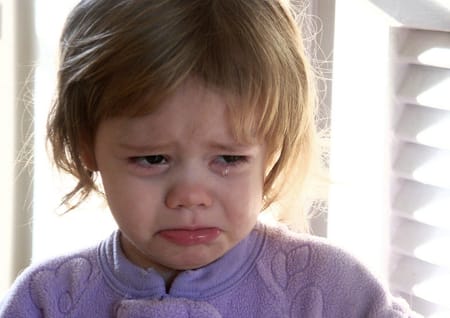
Children cannot put their feelings into words. That's why they become sad and start to cry. Even if it is natural to want to protect children from sadness and fear, these feelings are important for the child. Telling them "don't cry" or "don't be afraid" doesn't help them and gives them the feeling that their fears and emotions have no value.
It is better to help the child by recognising and understanding sadness or fear. In this way, you can talk to the child about what triggers these feelings and they learn to express themselves. Compassion from parents shows children to have compassion for other people.
4. compare children with each other
Comparing children with their siblings and pointing out something that the other child can already do is almost always a shot in the arm. The child has its own personality and its own strengths and weaknesses, not those of the other child.
Every child develops in its own way. What one child can do early on, the other may only learn later, but this is balanced out by other things. If the children feel pressurised to emulate their sibling role model, this does not speed up the development process at all, but rather makes the child aware of their weaknesses. Instead, a child's positive successes should be praised without referring to the other child.
5. threats
Threats are almost always the result of total frustration, but are rarely effective. Threats such as "don't do that or else..." often cause problems. For one thing, sooner or later you have to carry out the threat for it to be taken seriously at all. But more importantly, the prospect of punishment rarely changes children's behaviour. Children also adopt this language and threaten younger children.
6. wait until dad comes home!
This familiar cliché is another form of threat and undermines discipline. To be effective, action must be taken immediately. If consequences are postponed until the father comes home, the children will have forgotten what they did wrong by then. Conversely, the anticipatory fear of punishment can be much worse than the offence warrants.
In addition, the mother's authority is diminished because she is obviously not in a position to act herself. The children are less likely to listen to what their mother has to say because she won't do anything about it herself. Without being asked, the father is also forced into the role of the bad cop, as he is expected to take disciplinary action, even though he was not even present in the situation.
7. hurry up!
In these fast-moving times, where deadlines have to be met, this is probably a standard phrase for parents, as children do not yet have a concept of time. You can calmly tell your child that there is not much time left, but it depends on the tone of voice. If you stand in the doorway with your hands on your hips and your feet dragging, you quickly make the children feel guilty for keeping their parents waiting, but it's not really their fault. It is more important for the child to put their shoes on "all by themselves" in peace and quiet than to arrive somewhere on time. The feeling of guilt has a negative effect on the child, but does not help them to get ready any faster.
It is also certainly not very nice if the last image of the mum in front of the kindergarten is that of an angry fury who is shouting for no apparent reason. As all the shouting and scolding won't help anyway, it's better to try to encourage the children a little in a calm manner. This can be done with a little bribery, for example: get in the car quickly and you'll get a lollipop!
8. well done! is not always the best praise
"Well done", "good boy" or "great" are nice phrases for positive reinforcement, but only if they are not distributed too generously that they lose their meaning. Children also understand the difference between praise for trivial things and for real effort.
In order for the sentence to retain its positive effect, it should only be said for the right use. If a child paints dozens of pictures every day, not every one of them should be praised.
The praise "well done" can be too general. Be a little more specific and praise the colours of the picture.
It's better to praise the behaviour than the child, so it's better to say "you made a great effort for your picture" than to simply say "good boy".
Of course, the tone is also important. The child's effort deserves your full attention if the praise is to sound appropriate. If you don't even look up from the paper and absent-mindedly say "well done, son", the child will sense that this was not sincere praise.