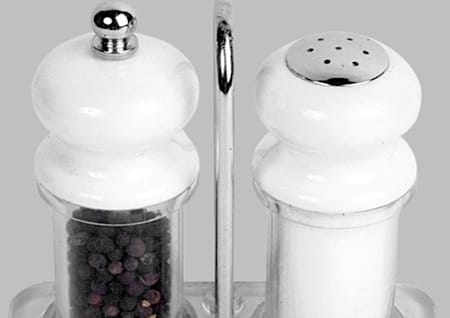
Health experts advise against adding salt to baby food. Too much salt is unhealthy, even dangerous, for babies. Without knowing it, many parents give their baby too much salt with ready-bought baby food or meals intended for adults.

Why is too much salt dangerous
The human body needs salt for metabolic functions. Salt cannot be produced by the body, which is why small amounts of salt in food are important. However, the baby's body needs very little salt. For babies under one year of age, it is less than 1g per day. The salt requirement is already covered by breast milk or baby milk.
The baby's kidneys cannot process more than 1g of salt per day. Giving the baby too much salt can cause serious kidney damage. In rare cases, babies even die because parents feed them pureed food containing the amounts of salt of an adult.
If the body gets excessive amounts of salt already in baby or childhood, this can lead to high blood pressure later on.
Baby food does not have to taste bland
As adults, we are already used to salty tastes and usually find baby food bland and tasteless. However, the baby's sense of taste is not yet as developed and it has not yet adopted a preference for salty flavoured food. Food that seems bland to adults is just right for the baby, because the baby cannot miss the salty taste if it has not yet become familiar with it.
Salt-free food does not have to be tasteless either. Instead of salt, you can add herbs to baby food. Herbs not only give natural flavour, but are also very nutrient-rich. A little black pepper also enriches the taste of the food and does wonders for the digestive system.
Herbs, spices and garlic can be added to baby food, but they must be introduced slowly. Only add one new herb or spice at a time and wait at least four days before trying something new. This way you can identify and prevent potential food allergies or digestive problems.
Hidden salt in baby food
With baby milk and baby porridge, it is very important to pay attention to the correct concentration indicated on the package. Baby food that is too concentrated may contain too much salt.
Also, do not use soup seasoning for baby food because it contains very high amounts of salt.
When using canned food, check beforehand whether salt has been added. When using ready-made baby food, pay attention to the appropriate age rating. This is not only based on the baby's ability to break down and digest food, but older babies can also tolerate larger amounts of salt.
Cheese contains a surprising amount of salt. It is best to look for cheeses that have used little salt in their production. They are usually found under diet products.
Ham, sausage and ready-made sauces contain amounts of salt that are too high for a baby.
Biscuits also contain salt, so feed only in moderation. It is best to bake biscuits and cakes yourself and reduce the amount of salt given.
Before the baby is one year old, it is better to completely avoid crisps, French fries and similar snacks.