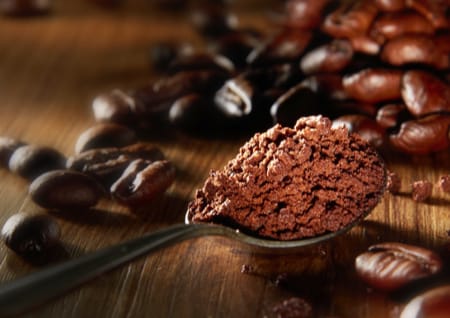
Coffee beans come from two main types of coffee: Arabica and Robusta. The other coffee varieties are Bengal coffee (Coffea benghalensis), Congo coffee (Coffea congensis), Liberian coffee (Coffea liberica and Coffea excelsia), Sierra Leone coffee (Coffea stenophylla), Coffea bonnieri, Coffea gallieni and Coffea mogoneti. Apart from Liberian coffee, only a few coffee varieties are exported.

Coffee varieties by growing region
Altura Coatepec
Coatepec is a small Mexican town 15 kilometres south of Xalapa. Altura Coatepec has large coffee beans and excellent quality. The shade-grown coffee has a medium to high acidity and a rich flavour.
Arabic mocha
Arabica from Mocha in Yemen. It can be found on the market under the names Mattari and Sanani. Sanani is slightly fruity, while Mattari has a good acidity and a chocolaty flavour. No chemicals are used in the production process.
Arusha
Arusha is an area in Tanzania where excellent Arabica coffee is grown.
Bani
Bani is a town in the Dominican Republic. The climate produces coffee beans with a characteristic flavour. The official coffee growing areas in the Dominican Republic are Barahona, Cibao, Neyba, Noroeste, Sierra Central, Sierra Occidental and Sierra Sur.
Blue Mountain
Jamaican Blue Mountain is probably the most contradictory coffee variety in the world. The coffee is characterised by a nutty and unique beef flavour, but many coffee plantations are neglected and deliver a mediocre product. Poorer quality coffees are often sold under the same name.
Bugisu
This is the sales name for Arabica from the slopes of Mount Elgon in Uganda. Most of the coffee grown in Uganda is Robusta and is used for instant coffee.
Chiapas
Chiapas is the southernmost state in Mexico on the border with Guatemala. Coffee from Chiapas typically has a chocolaty flavour.
Chipinge
The small town is located in south-east Zimbabwe. The good growing conditions produce the best coffee in the country, which is traded under the name Zimbabwe Salima. Zimbabwe is appreciated for its pleasant aftertaste.
Harar (Ethiopia)
Ethiopia Harar is full-bodied and aromatic. The coffee beans are unusually long and have a blueberry-like flavour.
Sidamo (Ethiopia)
The coffee from the Sidamo region is named after the indigenous people. Coffee from the Yirga Ch\'efe region is sometimes identified as Sidamo, but is traded under the name Yirgachefe.
Yirgachefe (Ethiopia)
This coffee is considered the best in Ethiopia and has a flowery, fruity flavour.
Guatemala Antigua
One of the best-known coffees in Central America. The coffee is aromatic with a chocolaty acidity and is one of the most intensely flavoured coffees in the world.
Guatemala Coban
The market name is Tanchi. Tanchi coffee is comparable to other varieties from Guatemala, but is characterised by bitter-spicy aromas.
Guatemala Huehuetenango
The coffee from the western mountain regions of Guatemala is aromatic and fruity.
Hawaii
Hawaiian coffee comes mainly from the islands of Hawaii and Kauai. The Kona region of Hawaii has ideal conditions for Arabica. The flavour is slightly buttery with spicy characteristics. Cona blend coffees often contain no more than 10% Hawaiian coffee. Coffee is also grown on the islands of Molokai and Maui, but with less favourable climatic conditions.
India Monsoon
150 years ago, the British exported fresh coffee beans to Europe. The journey by ship often took six months, during which the beans were exposed to rain and humidity and their flavour changed. Europeans became accustomed to the golden, earthy brew. After the opening of the Suez Canal, transport was shortened and the coffee beans were no longer exposed to the monsoon rains. As their flavour was different as a result, coffee from India lost popularity. In order to recreate the flavour of monsoon coffee, the coffee beans are deliberately stored on the Indian coast for 12 to 16 weeks during the monsoon.
Java
Indonesian coffee from the island of Java was originally introduced there by Dutch explorers, albeit Arabica. After the Arabica coffee was wiped out by a plague, it was replaced by the more resistant Robusta. The coffee is less acidic. Some Java coffee is stored for two to three years, which causes it to lose even more acidity and take on a sweet flavour. This aged coffee is known as Old Java.
Sulawesi
The Malaysian peninsula of Sulawesi produces one of the finest coffees in the world. It has a sweet and earthy flavour. Due to the demand in Japan and the relatively low yield, this coffee is more expensive than Sumatran coffees.
Sumatra
Two of the best and most famous coffee varieties in the world come from Sumatra: Mandheling and Ankola.
Kenya coffee
Kenya is world-famous for coffee cultivation, often simply referred to as Kenyan.
Costa Rica Tarrazu
The coffee is named after the San Marcos de Tarrazu valley. Other South and Central American coffee varieties include Bourbon, Caturra, Maragogype and Typica, as well as Colombia, which accounts for around 10% of the world's coffee supply.