Mate tea is one of the six most common stimulants in the world, along with coffee, tea, cocoa, guarana and kola nut. Among them, it is the clear winner in terms of the balance of energising substances and nutrients. For centuries, mate tea has been appreciated by South Americans, and its popularity has spread around the world. But because of the high caffeine content in mate tea, there are many sceptics, so how healthy is mate tea?

What is Mate Tea
Mate is drunk as a tea drink in Europe and belongs to the category of herbal teas.
Mate is prepared from the leaves of the mate tree (Ilex Paraguariensis), which grows in the rainforest in Argentina, Brazil and Paraguay. The leaves of the tree have a natural content of 24 vitamins and minerals, 15 amino acids and abundant antioxidants. According to a study from the 1960s, mate contains practically all the vitamins necessary for life.
Besides these nutrients, mate contains caffeine, theophylline and theobromine, the well-known stimulants in coffee, tea and chocolate. Unlike black or green tea, mate contains little tannin and therefore does not become bitter when brewed very strongly.
Coffee contains oils and acids that can upset sensitive people's stomachs. Mate does not have these oils and acids and is therefore much easier on the stomach.
As with coffee, particularly high quality mate is obtained when the plants are cultivated in the shade. Due to the longer ripening period, the leaves contain more nutrients and aromas than when grown in the sun.
What is healthy about mate tea
Mate tea contains more nutrients than green tea. In fact, mate has been used for centuries in South America for a variety of medicines.
Mate tea contains the natural vitamins A, C, E, B1, B2, niacin, B5 and B Complex, the minerals calcium, manganese, iron, selenium, potassium, magnesium, phosphorus and zinc as well as carotene, fatty acids, chlorophyll, flavonol, polyphenol, trace elements, inositol, pantothenic acid, tannin and 15 amino acids.
In addition, mate contains many times more antioxidants than other energy drinks, more even than green tea.
The drink is known as a remedy for fatigue, to promote weight loss, as a mild antidepressant and effective against headaches.
However, like coffee and tea, mate tea should be enjoyed in moderation and not in masses. One to two cups per day are sufficient. It is not recommended to enjoy mate tea at the same time as cigarettes, as this combination is suspected of being carcinogenic.
How is mate tea made
The leaves are dried at low temperatures to preserve the nutrients. Afterwards, the leaves are left to mature in wooden barrels, similar to wine making, so that the flavour and aromas can develop. The tender stems of the leaves are also dried, as they give the drink a slightly sweet taste.
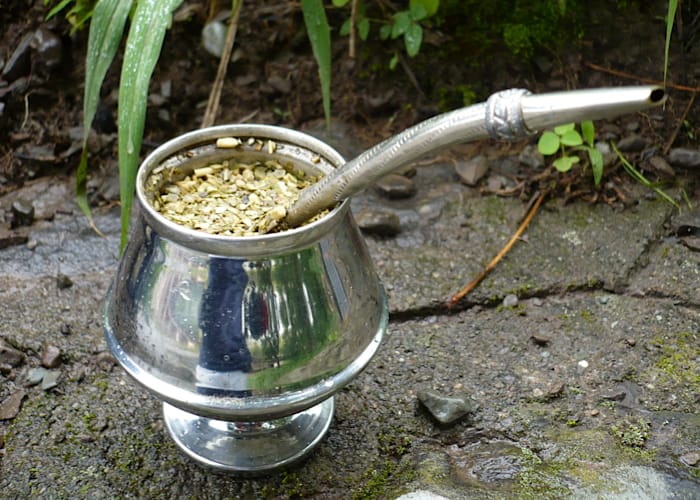
Mate tea in the traditional calabash