The fresher the egg, the better it tastes. So who wouldn't want to eat breakfast eggs that are as fresh as possible? But how do you recognise how old a hen's egg is? There's a simple trick you can use to determine whether eggs are fresh.

Place the egg in a bowl of cold water that is deep enough for the egg to sink into. A very fresh egg, up to 6 days old, sinks directly to the bottom and remains there horizontally because the air bubble inside is still very small. If the egg sinks to the bottom and lays at an angle, it is more than a week old. If the egg sinks to the bottom and remains there vertically, the air bubble has already grown slightly larger. This means that the egg is about two weeks old. An egg that floats on the surface of the water is too old and should no longer be eaten. On average, eggs will keep for about three weeks if they are kept in the fridge.
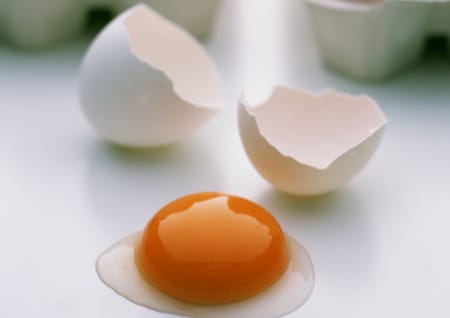
Fresh eggs are slightly rough. The egg white is very thick and dense around the round yolk. Older eggs are smooth and shiny. If the egg white is watery and the yolk is flat, the egg is about three weeks old.
There is an air bubble inside the egg, which becomes larger over time because the eggshell is semi-permeable. The larger the air bubble becomes, the easier it floats to the water surface.
Tips:
Eggs that are about a week old are easier to peel than very fresh eggs.
You can tell whether an egg is hard-boiled by turning it on a flat surface. If the egg rolls unevenly, it is still soft because the yolk is moving inside. In a hard-boiled egg, the inside is firm and the egg moves evenly.