How do you actually make olive oil? It's not that difficult, just a bit time-consuming. Here's how you can press olive oil yourself at home.

Olive oil is pressed from green, particularly oily olive varieties. Olive varieties that are often used for oil are Arbequina, Arbosona, Tuscan or Lucca. Take your ripe olives and clean them thoroughly to remove dirt and leaves. Olives start to ferment after picking, so they should be used to make oil within 8 hours.
Once the olives are clean, they must be crushed. It is not necessary to remove the stones, even if they do not contain any oil. You can grind them with a mincer or blender until they become a thick paste. Avoid heating the olives, as this will affect the flavour of the oil.
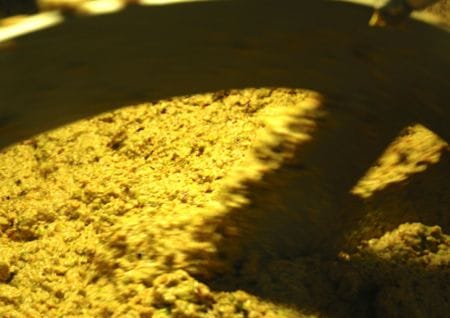
The olive paste can now be pressed in a conventional cold juicer. The juicer starts by separating the water and oil in the olive paste, but after pressing the water and oil are still together. This is left to stand in a container until the water naturally settles. Now you can pour the oil into a bottle. Light, heat and oxygen damage the quality of the olive oil. You should therefore close the oil bottle tightly and store it in a dark place at room temperature. This will keep the olive oil for at least 12 months.
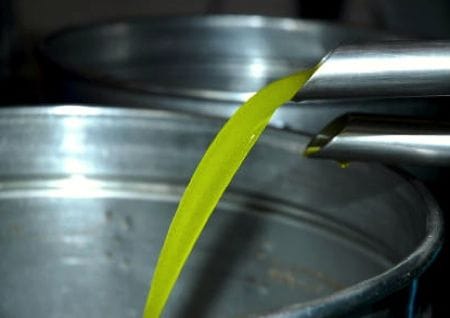
With real olive presses, you can skip the crushing step. In these models, the whole olives are placed in the funnel and the pressed oil comes out at the bottom. There are easy-to-use olive presses for the home.
What does the colour say about the olive oil?
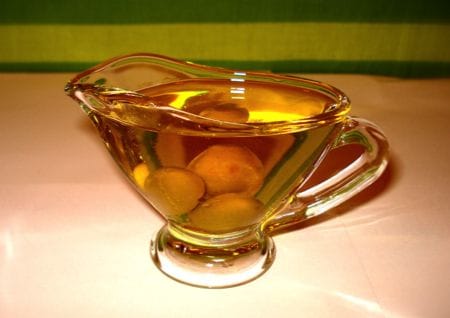
Olive oil pressed from unripe olives has a light to deep green colour. Oil from ripe olives has a more yellowish colour. The colour says nothing about the quality of the oil, only the intensity of the colour. The more intense the colour, the higher the quality of the oil.
Olive oil from ripe olives, i.e. with a yellowish colour, contains more polyphenols and is therefore more valuable for health.