 The name amaranth doesn't ring a bell for most Europeans, as it hasn't yet penetrated very far into our kitchens.
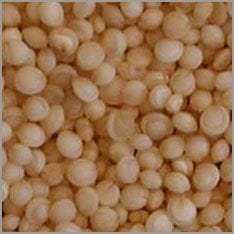
Amaranth is a cereal-like grain, although it does not belong to the cereal family, but has been placed there for the sake of simplicity.

Amaranth originates from South America, where it was considered a sacred plant by the Aztecs. They cultivated the plant and initially used it mainly for religious purposes, as they made a paste from the ground grains with other ingredients to form figures associated with rituals and human sacrifices. As this horrified the Spanish conquistadors and their Catholic faith, they tried to ban the cultivation and use of the plant in any form. The plant could only be protected from extinction through clandestine cultivation.
In present-day Mexico, Ecuador, Peru and Bolivia, but also in India and Nepal, amaranth is still used today and is even an ingredient in some typical local dishes and drinks, e.g. the Peruvian beer called "chicha" is made from amaranth.
The leaves of the amaranth plant can be eaten as a vegetable, the seeds can be used to make drinks, as mentioned above, but they are also used to make sweets.
Even its flowers have a positive effect and are used as medicinal plants against pain, or in cosmetics, because they have a beautiful red colour that is very suitable for blush and lipstick.
Even though amaranth is not officially categorised as a grain, it is just as versatile and easy to prepare as most grains. Currently only available in organic food shops, amaranth is available as a whole grain or already ground into flour. It is therefore versatile and can be used in combination with other types of flour or grains, but can also be prepared on its own. Amaranth can be roasted, puffed like popcorn, sprouted or simply boiled in water. It is used in muesli, for vegetable dishes and in baked goods.
It is highly mucilaginous as it contains a lot of starch (up to 60%) and takes about 18-20 minutes to soften, but should not be cooked any longer, otherwise it will form a viscous mush.
The flavour is mild, slightly sweet and nutty and can be varied very well with ingredients such as stock and spices.
The nutrients include fibre, vitamins A and C, iron, calcium, potassium and magnesium as well as vegetable proteins and essential amino acids that our body urgently needs but cannot produce itself. The nutritional values are represented in much higher proportions than in many typical foods, e.g. more calcium than in milk, or more iron than in wheat.
As the plant is very easy to cultivate, you can even grow it in your own garden, it doesn't need any special soil as it is adaptable and is hardly ever attacked by pests.
The only plausible reason why it has not yet been discovered and adopted by domestic agriculture is probably that the amaranth plant is traditionally harvested by hand and mechanical harvesting is not yet widespread. Nevertheless, amaranth is now grown in some states in the USA and is becoming increasingly popular there too.