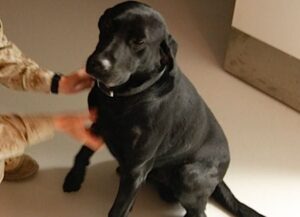
Choke collars are excellent collars for training and retraining a dog, provided they are used correctly. With young dogs, it is much easier to teach them commands with a choke collar.

However, choke collars are not intended for constant use and are most effective when they are only used occasionally. Continuous use dulls the dog until it eventually stops responding at all.
The choke collar must be the right size for the dog. It is best to try on several sizes or seek advice from a pet shop. The collar is put on in the shape of the letter P over the dog's head. If the collar is put on the wrong way round so that the P is the wrong way round, the collar will tighten and hurt the dog.
The dog lead is attached to a circular ring on the dog's neck. Insert the chain of the choke collar and check that it tightens and retracts correctly. Only when you are sure that the choke collar is working as intended should you start training.
Every time the dog does not listen or does not behave, the chain should be tightened. Even if the dog pulls too hard when you take it for a walk, give it a little tug with the collar. As soon as the dog changes its behaviour, you should release the pressure and not keep the collar permanently taut. A choke collar only works properly if the dog makes a direct connection between bad behaviour and the tightened collar. Good behaviour should be rewarded with a loose-fitting collar.
Once the training or walk is over, the choke collar should be replaced with a conventional collar. A choke collar can get caught and injure or even suffocate the dog and should therefore only be worn under supervision.