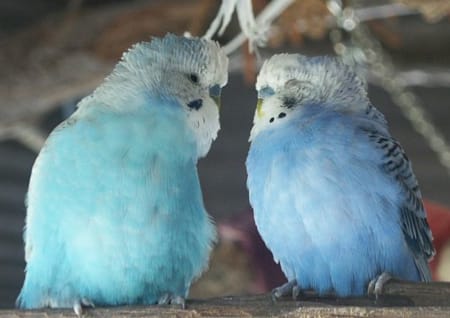
A sick bird almost lies on the perch or even perches on the ground. Its feathers are fluffed up, its eyes are closed and it is breathing heavily. How can you help the sick bird?

In the case of external injuries such as wing or leg fractures, a sick bird usually suffers less and learns to cope with them. The injured limb hangs limply and does not bear any weight.
The first aid for a sick bird is to irradiate it with a red light lamp, as the bird must be kept warm. The temperature in the cage should be around 35 degrees. The bird must be protected from draughts. As the bird recovers, the average temperature in the cage should be lowered, but gradually so that it does not suffer a relapse.
A bird keeper should have a small pharmacy ready for emergencies. The bird pharmacy should include a red light lamp, ointment for open wounds, haemostatic ferric chloride cotton wool, blunt scissors and tweezers, disinfectant for the cage, camomile tea, leukoplast and antibiotics for bacterial infections (terramycin or aureomycin).
Diseases of the bird and first aid
Eye diseases
For inflamed conjunctiva, watery or sticky eyes and eye swelling, rinse the affected eyes several times a day with a lukewarm camomile solution.
Fractions
Splint broken wings or legs with a straw and do not wrap them too tightly with Leukoplast. The bird should be kept in a quiet individual cage for two to three weeks.
Diarrhoea
In the case of watery faeces, soiled anus, loss of appetite and apathy, the bird should first be observed closely. Excitement is often the cause, so that the symptoms disappear by themselves after a short time. If the bird's condition does not improve within a day, it should be taken to the vet.
Overweight
Sluggish, heavy-bodied and obese birds have a poor diet and too little exercise. To lose weight, the bird should be put on a lean diet of millet, fruit and green food and given more exercise. No fasting and no shooing!
Encrusted legs
Encrustations on the toes and legs with protruding horn scales can be caused by dirty cages and perches. After cleaning the cage, wash the bird's legs with camomile tea and then rub in wound ointment. Until the feet have healed, line the cage with newspaper instead of bird sand.
Lime legs
Protruding scales on the toes with white crusts, accompanied by restlessness and itching can be calcified legs caused by mites. The legs are rubbed with Vaseline.
Legenot
Female birds can have an egg that is ready to lay. They sit around fluffed up and motionless. If they are not treated, the female birds can die very quickly.
For treatment, smear some cooking oil around the anus and gently massage the lower body. Be careful not to crush the egg inside.
Constipation
Stuck faeces will leave the bird impassive in the cage. Rub a little cooking oil around the anus and put a drop of castor oil in the beak.
Moulting difficulties
Birds regularly renew their plumage every four to six months. Occasionally, the birds have moulting difficulties. They look sickly and their feathers are dull and brittle. Moulting difficulties can be caused by inadequate nutrition.
For treatment, give special bird drinking water for the nutrient supply. In addition, give moulting aid, multivitamin preparations and a limestone.
Claws too long
The claws normally wear through rough surfaces. Caged birds often lack opportunities to sharpen their toenails, which is why they occasionally need to be clipped if the bird has curved claws with bent toes.
The nails must be shortened with claw scissors, about 4mm in front of the blood vessels, which shimmer through the claws in a reddish colour.