Dwarf ponies are easier to keep than a large pony or horse because of their small size, but they still have certain needs when it comes to feeding, stabling and keeping them healthy. How do you care for a dwarf pony properly?

Characteristics of a dwarf pony
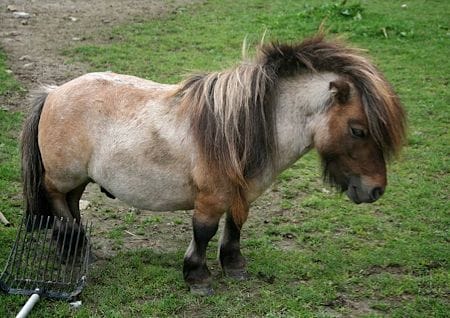
Dwarf ponies are between 70 and 95cm high. Through breeding selection, a miniature horse was already intentionally created centuries ago. However, they have only been officially recognised as an independent breed since the 1970s. Miniature ponies are gentle and affectionate and have a close bond with their caregivers. There are dwarf ponies in almost all colour breeds. They have a life expectancy of 25 to 30 years.
Dwelling for dwarf ponies
Due to their size, conventional horse stalls are not suitable for dwarf ponies. As their head is at a height of about one metre, they need sufficient air circulation and light at this height. The partition wall of a box for a dwarf pony should be low enough for the pony to get its head over.
A box size of about 10 square metres with a 15 to 20 centimetre thick layer of straw or litter is sufficient.
Even dwarf ponies need daily exercise in the fresh air. However, their paddock or pasture must have appropriately low and closely spaced crossbars as fencing so that the ponies do not escape.
Dwarf pony feeding
Dwarf ponies need fresh willow grass without poisonous plants and weeds. In addition, they need fresh hay every day. The better the quality of the hay, the better the nutrient supply. Low quality hay should be improved with additional feeding of alfalfa or clover hay.
Dwarf ponies should not be fed pure oats. A feeding of pellets per ration should be about half a kilogram per 100 kilos of body weight. The dwarf pony should get one ration in the morning and one ration in the evening.
It is important not to overfeed dwarf ponies as they are prone to obesity, laminitis and colic.
Vaccination of a dwarf pony
Dwarf ponies need the same vaccination protection as large horses. Every three months they should receive an amount of worming medication appropriate to their body weight and regular vaccinations against tetanus, rabies, influenza and other region-specific diseases. It is best to ask the local veterinarian about this.
Hoof care for dwarf ponies
Dwarf ponies are prone to laminitis because they are often overfed. Their hooves should be scraped and cleaned daily. As with the large horse, their hooves need to be trimmed regularly every six to eight weeks, but they do not need horseshoes. Daily mucking out of the stall is important to prevent hoof rot.
Husbandry of the Dwarf Pony
Dwarf ponies are happier in pairs or with another animal that matches their body size, such as a goat. They are sociable animals and need contact with their humans. Dwarf ponies kept alone develop behavioural problems and become ill.
Dwarf ponies must not be ridden because their bones are too sensitive. However, they are suitable as draft horses. A dwarf pony typically has a body weight of 100 to 200kg and can be loaded with 25kg at most, even for short periods of time.