
Anxiety disorders and nervousness are not only found in humans. Dogs, as loyal and constant companions to humans, also often suffer from nervous disorders. If you have an extremely anxious and neurotic dog, you should take its suffering seriously and treat it.

Anxiety, nervousness and phobias in dogs
Fear is a natural and instinctive feeling that arises from a situation, a person or an object. The danger can be real or perceived. The body reacts to the fear-inducing situation by stiffening, fight or flight behaviour. The context and intensity of this fear determine whether the reaction is exaggerated or normal. It is important for you as a dog owner to know that abnormal reactions are learnt and not innate, which means that they can be unlearned with patience and care.
If the dog shows constant and excessive fear as a result of a traumatic or apparently traumatic experience, this is known as a phobia. A long-lasting memory is formed in the brain and central nervous system, which triggers an automatic reaction when a similar situation is repeated. In dogs, most phobias occur through association with loud noises, such as thunder or fireworks.
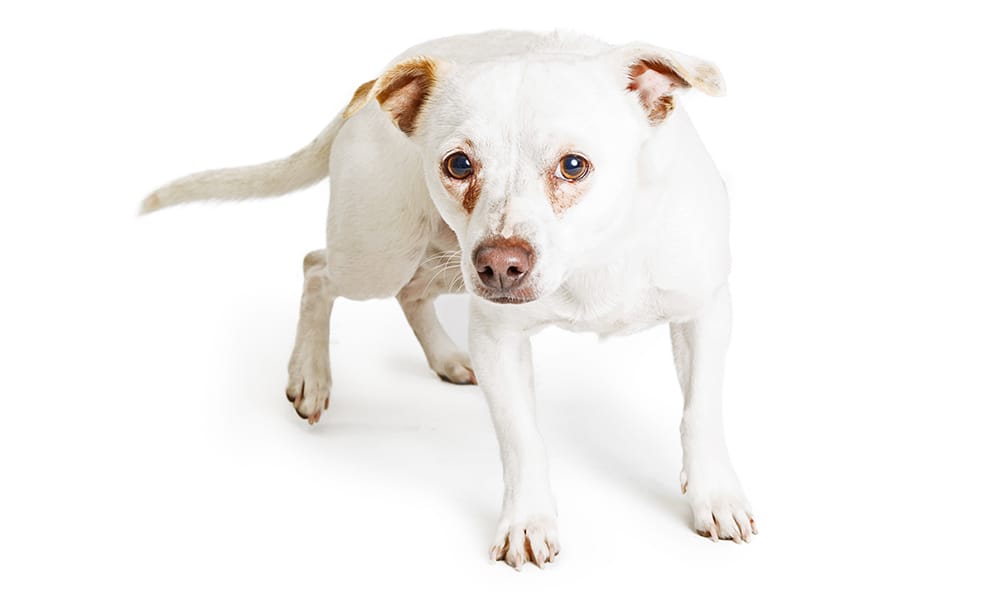
An anxiety disorder exists when an anxiety reaction is not triggered by a specific situation, but rather in anticipation of a perceived danger. If the dog is afraid of an unknown or imaginary danger, this triggers physical reactions. These physical reactions are expressed through urination, exaggerated barking, whining or destruction.
Dogs are often so emotionally attached to their owners that they develop separation anxiety. A dog suffering from separation anxiety shows extreme stress behaviour when left alone.
Certain dog breeds such as the Siberian husky, the greyhound, the collie and the poodle are characterised by profound idiopathic fear. This is a seemingly causeless fear. These dog breeds are thought to have a genetic hunter background.
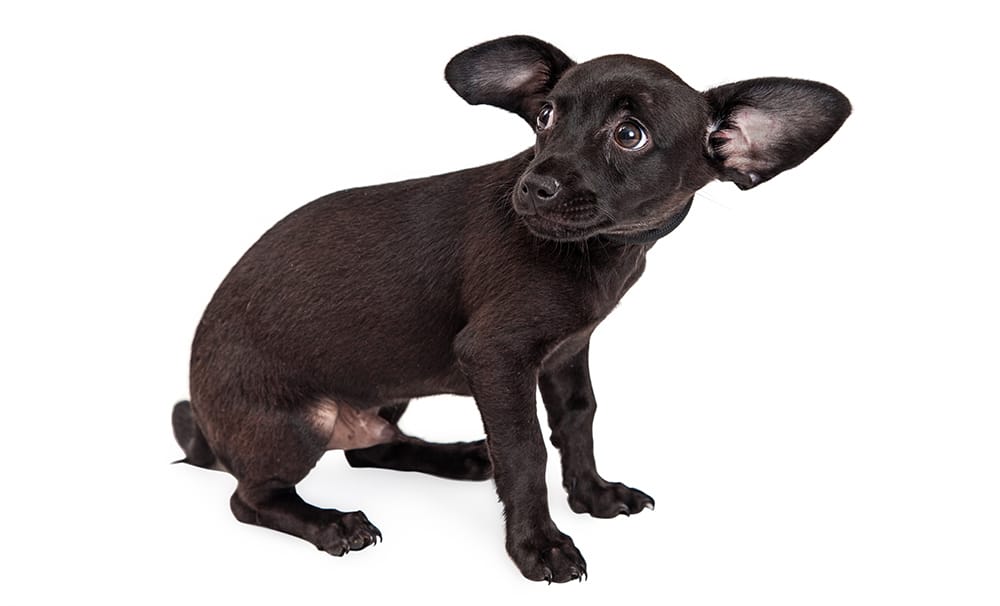
How fear manifests itself in dogs
The psychological symptoms of an anxiety disorder in dogs are expressed in mild cases by trembling, tail tucking, hiding, passivity and flight behaviour.
If the fears have already increased to panic, the dog tends towards active escape behaviour and potential self-endangerment.
Typical physical symptoms of fears and phobias in dogs are diarrhoea and spontaneous urination.
Dogs with long-term anxiety disorders and neuroses tend to lick or nip themselves constantly, resulting in sore patches in their fur.

What causes anxiety disorders and phobias in dogs
Anxiety can be caused by actual traumatic experiences or by physical suffering. Painful illnesses or injuries promote the development of anxiety disorders or phobias. There may also be an underlying viral infection of the nervous system or poisoning.
The most common cause of fears and phobias in dogs is a bad experience at a young age. A dog that has not experienced a normal social environment until it is 14 months old, or has had a particularly fear-inducing experience, often develops a habitual fear of everything unknown.
Phobias and panic attacks are often caused by a repeated situation in which the dog wanted to flee in fear but could not because it was locked up.
Separation anxiety occurs in dogs that have already been abandoned once or several times and left by their owners.
Diagnosis of anxiety disorders and neuroses in dogs
The vet should first check for physical ailments as triggers, for example thyroid disease or a brain tumour. He should also test the blood for possible poisoning such as lead poisoning. If there is no physical cause for the dog's behaviour, the vet will probably diagnose anxiety, anxiety disorder, neurosis or phobia, depending on the intensity of the symptoms and the dog's background.