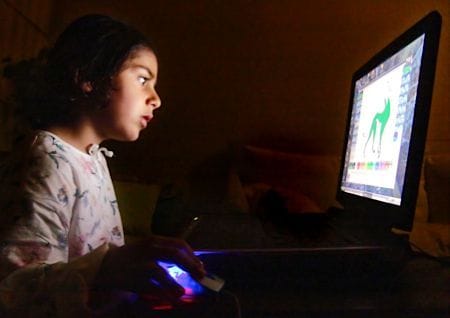
Nowadays, computer and video games and any kind of technology are simply part of modern life. Electronic games on iPads, game consoles, smartphones or PCs are taking up more and more space among leisure activities. Such games for children are often demonised because older generations have too little knowledge. Electronic games are actually and demonstrably very valuable for children's development.

Computer games have a strong appeal to the youngest generation. The reason they hold children's interest is that most games have a clear goal to achieve, deal with the player's expectations, taking into account different levels of difficulty and give the player feedback, which is fundamentally important when learning complex relationships.
Of course, excessive use of electronic devices is harmful. Just as any other one-sided and excessive activity can be harmful. The bad reputation of computer games is merely the result of ignorance, sensationalist and subjective information from public opinion and little or no experience in dealing with IT. In reality, it cannot be denied that computer games have a positive effect on children.
Positive effect of computer games on children
- The child acquires basic computer skills through independent use of the operating system.
- The child's attention is focussed on a single thing for a long period of time. Parents often complain that their children's attention span is extremely short. Computer games often capture children's attention for long periods of time, which teaches them that perseverance achieves a positive result.
- Children develop a sense of control, i.e. they learn to take control of something themselves. Every click produces a result. This is important training for future activities.
Working with a keyboard and screen or touchscreen promotes the development of visual and manual coordination and perceptual skills.
- The children playfully improve their motor and cognitive skills, learning and understanding written and spoken words, creativity and problem solving.
It goes without saying that not every computer game is equally suitable for all children. Parents should only provide age-appropriate games and check the content of the games themselves. Every game has a PEGI code (Pan European Game Information), which provides information about the content and age recommendations. And regardless of the type of game, a computer game does not replace parental supervision, but is an additional tool. Parents should take an active interest in their child's gaming development and participate in it.
Information code of computer games

Game contains frightening scenes and can be frightening.

There are allusions to drugs or narcotics.

Game contains violent scenes.

Game can be played online.

Game contains swear words.

Game contains sexual content.

Gambling can promote gambling addiction.

Addresses discriminatory issues.