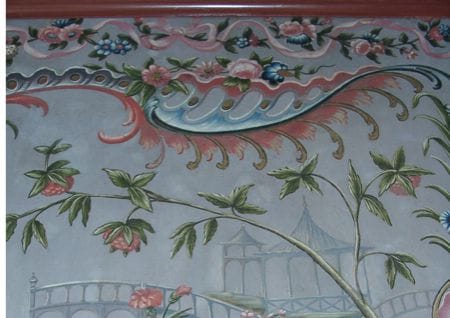
Rococo is the epoch of European art in the 18th century. It follows the Baroque and merges into Classicism.

The term Rococo was coined in the 1930s and initially had a negative meaning. The taste of people in the era of classicism considered the cheerful decorations of the rococo as exaggerated and frivolous. The word is derived from the French word for shellwork (rocaille), which was the typical ornamental form of the Rococo. Rococo also began its period in France.
Rococo is not characterised by universal, artistic theories, but is expressed through decoration and ornamentation. The decoration is characterised by playful lightness and elegance. Other characteristics of the Rococo are cheerful sensuality, taste for colour, virtuosity, buoyancy, gracefulness and artistic dissolution of form. The preceding Baroque epoch strove for imposance and majestic effect, while the Rococo favours subtle effects. The difference is also noticeable in music: the Baroque period produced gravitationally striding dance music, while the Rococo loved rural round dances. In short, the Baroque stands for dignity, the Rococo for intimacy.
How to recognise Rococo architecture
How to recognise Rococo sculpture