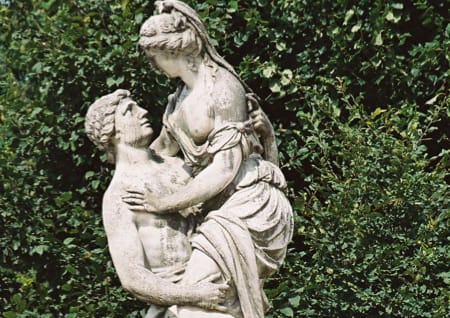
Sculpture in the Rococo period was used almost exclusively for the sculptural decoration of buildings, both in the interior and on the façade. Sculptural figures were also used to decorate gardens.

As in previous eras, sculptures enhanced the effect of buildings, especially churches. Emphasis was placed on sophisticated effects and the impact of material, light and colour. Rococo sculpture derives its charm from the overall composition of an infinite number of details. The incorporated details emphasise the festivity of the artistic style. Gracefulness is more important than grandeur when it comes to the subject matter.
The most popular materials for Rococo sculpture were lead, bronze, marble and porcelain. The Rococo period saw the emergence of a trend for Chinese porcelain and a tendency towards the exotic and bizarre. This trend is known as Chinese fashion or chinoiserie. Many Chinese pavilions, tea houses and porcelain cabinets were created during this period. Due to its fragility, porcelain was not intended for everyday use but for festive occasions and was therefore favoured by aristocrats. However, there was also a heyday of simple ceramic art. The leitmotif of Rococo art sculptures was the rocaille and its moving interplay of merging S- or C-shaped waves.