Kelvin is a unit of measurement for temperature.
The Kelvin temperature scale is a temperature scale with an absolute zero below which there are no temperatures. Absolute zero, or 0K, is the temperature at which molecular energy is minimal, and it corresponds to a temperature of -273.15 ° Celsius on the temperature scale.

The degree Kelvin has the same size as the degree Celsius. The Celsius is based on the states of aggregation of water, the freezing point of water is 0 ° C, the boiling point of water is 100 ° C. This corresponds to 273.15K (0 degrees Celsius) and 373.15K (100 degrees Celsius) on the Kelvin scale.
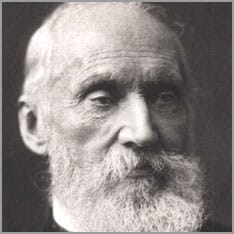
When writing temperatures in the Kelvin scale, it is common to use only the letter K without the degree sign. The temperature scale was named after the British mathematician and physicist William Thomson Kelvin, who developed it in 1848.
More about the historical milestones in the development of the Kelvin scale.
The history of the Kelvin scale
1848
Lord Kelvin (William Thomson) calculates that the absolute zero of the temperature corresponds to -273 ° C on the air thermometer of his time.
1954
The temperature of absolute zero is set at exactly -273.16 degrees Kelvin.
1967/68
Kelvin, the unit of thermodynamic temperature, is now officially equal to 1/273.16 part of the thermodynamic temperature of the triple point of water.
2005
The Comité International des Poids et Mesures (CIPM) affirms that, for the purpose of delimiting the temperature of the triple point of water, the definition of the thermodynamic Kelvin temperature scale refers to water of isotopic composition.