A peacock has deep symbolic meanings that vary according to culture and environment. The peacock feather in particular is more than just an ornament.
The peacock feather is associated with both positive and negative symbolic meaning. As a positive symbol, the peacock feather embodies pride, nobility and fame. Peacocks are also known to eat poisonous plants without harming themselves. Therefore, peacock feathers often symbolise incorruptibility and immortality. Peacocks are often considered vain and stupid birds, so their presence can symbolise unrestrained decadence. The feathers are then interpreted more as a symbol of vanity and bacchanalian debauchery.

The peacock feather has been a symbol of beauty, prosperity and happiness in many cultures and civilisations for centuries. As a peacock spreads and displays all its feathers, they represent openness to Buddhists. Buddhists attach great importance to the fact that peacocks can eat poisonous plants intact, namely the ability to flourish in the face of death.

The significance of the peacock feather in different cultures
In Hinduism, the peacock is considered the mount of the god of war and victory, Lord Kartikeya, and the feathers symbolise immortality, pride and protection. Alternatively, in Hindu mythology, the peacock is associated with the deity Lakshmi. Here, the peacock feather symbolises the god's qualities: patience, happiness and goodness.
In Chinese culture, the peacock feather symbolises integrity, as it is said that the feathers do not change colour even when soaked with the strongest poison. This shows how a person with strong moral character remains steadfast even under difficult circumstances.
In Western cultures, the peacock feather is a symbol of vanity and pride, as the peacock is known for its stunning and colourful feathers. It is also considered a symbol of resurrection and renewal, as every year the peacock sheds its old feathers and gets new, more radiant ones.

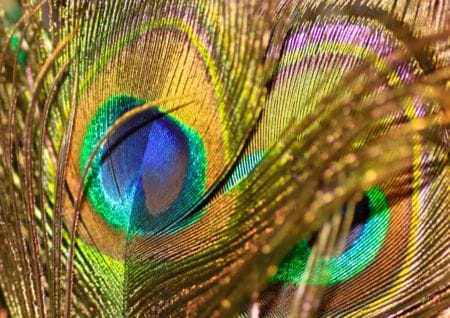
In ancient Greece, the peacock was associated with the goddess Hera, wife of Zeus and queen of the gods. It was believed that the feathers brought good luck and protection to those who possessed them, and they were often used in religious ceremonies and festivals. According to Greek myth, Hera placed the peacock's eye on the feathers to symbolise all-seeing knowledge and the wisdom of the gods.
Since a peacock spreads and displays all its feathers, they represent openness to Buddhists. Buddhists attach great importance to the fact that peacocks can eat poisonous plants intact, namely the ability to flourish in the face of death.
Overall, the peacock feather has been a symbol of beauty, prosperity, happiness, integrity and moral character in various cultures and civilisations for centuries. Whether you see it as a symbol of pride and vanity or as a symbol of protection and renewal, the peacock feather is a stunning and meaningful symbol that inspires and fascinates people to this day.

The Peacock in Western Culture
In Western culture, the peacock feather symbolises various things. Because of the peacock's stunning appearance and its impressive display of colourful feathers, it is often associated with pride, vanity and beauty.
In art and literature, the peacock feather has been used as a symbol of decadence and excess, representing the lavish lifestyle of the rich and powerful. In this context, the peacock feather can be seen as a symbol of extravagance and extravagance, as well as the beauty and excess that can accompany wealth and success.
The peacock feather has also been used as a symbol of renewal and resurrection, as each year the peacock sheds its old feathers and grows new, brighter ones. This represents the cycle of life and death and the idea that even in the midst of death and decay, there is always the potential for new growth and rebirth.
In the spiritual realm, the peacock feather is associated with protection and good luck. In many cultures, the peacock is believed to have a strong spiritual energy that can protect against evil and bring good luck to those who possess its feathers.